Written by Scott Nixon



351 Exchange vs Exchange Fund: How Concentrated Holders Decide
351 Exchange vs Exchange Fund: How Concentrated Holders Decide
Both structures defer capital gains on a concentrated position. The 25% contribution limit, not the fee, is what decides which one is available to you.
Scott Nixon
A 351 exchange and an exchange fund both defer capital gains on a concentrated position, and the difference that decides it is the lockup. A 351 exchange contributes holdings into a newly launched ETF and returns tradable shares within weeks, but the resulting fund must be diversified: no more than 25% in one issuer and no more than 50% across its five largest. An exchange fund accepts a far more concentrated position and carries a seven-year clock before contributed property can return untaxed.
Key Takeaways
- A 351 exchange has two diversification tests, not one: 25% maximum in any single issuer and 50% maximum across the five largest. Several big positions can pass the first and fail the second.
- The seven-year figure on exchange funds comes from the tax code, not fund marketing. Withdrawal terms can extend the practical hold further.
- Ongoing fees on the 351 side have compressed sharply, with some funds now below ten basis points.
- Exchange funds carry a placement fee and an ongoing servicing charge on top of management, and require placement through a broker.
- Neither structure removes the gain. Both defer it, and the original cost basis follows you into the new holding.
- Members report 351 ETFs tracking their benchmark closely once the post-launch rebalance completes, though the fund is not the index.
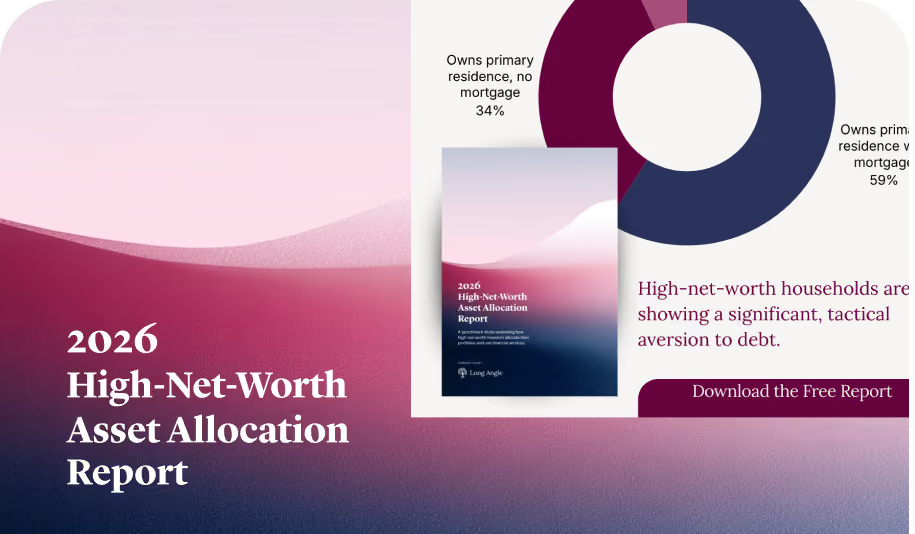
2026 High-Net-Worth Asset Allocation Report
See how high-net-worth investors with an average net worth of $17M are allocating across public equities, private markets, real estate, bonds and cash. Based on benchmark data from 230+ respondents.
What a 351 Exchange Does
A 351 exchange moves appreciated holdings into a newly launched ETF in return for shares of that fund, with no capital gain realized at the transfer.
The mechanism comes from Section 351 of the tax code, which allows property to be contributed to a corporation without triggering gain when the contributors collectively control the entity afterward. Applied to a fund launch, a group of investors seeds a new ETF with existing positions rather than cash. The fund issues shares, contributors keep their original cost basis, and the tax bill is deferred rather than paid.
The timeline is short. Members who have completed one describe receiving tradable ETF shares roughly a month after contributing, with holdings fully rebalanced four to six weeks after launch.
Availability has widened since 2024. What began as an occasional launch has moved to a roughly quarterly cadence from the larger sponsors, with several fund families now running them.
What an Exchange Fund Does
An exchange fund pools concentrated positions from many investors into a partnership, giving each contributor a share of the diversified pool instead of their single stock.
The tax effect is similar: no gain on contribution, and basis carries over. The structural difference is that an exchange fund is a private partnership rather than a listed fund, and it holds a required allocation to illiquid assets to qualify for the treatment.
That partnership structure creates the lockup. Redeeming early generally returns your original shares rather than a diversified basket, which defeats the point of contributing.
These funds have existed for decades and the manager set is established. Members note that a large fund family entered the category recently, which has put some pressure on terms.
The Dilution Limit Is the Decision Point
The binding constraint on a 351 exchange is diversification, and it is two tests rather than one. The resulting fund may hold no more than 25% of its value in any single issuer, and no more than 50% across its five largest.
Both tests come from the provision of the tax code governing transfers to investment companies, which excludes cash and government securities from the calculation. The first test is the one sponsors describe. The second catches people who assume they have cleared it: someone holding four large technology positions can satisfy the 25% limit on each and still fail the 50% test across the group.
This determines which structure is available to you. Someone holding a large single-stock position and little else cannot use a 351 exchange. Someone with a stale direct-indexed sleeve, several appreciated positions and one oversized holding generally can.
Members describe the split plainly. If the position can be diluted to roughly three dollars of other holdings for every dollar of the stock, the 351 route is preferred because the shares are liquid almost immediately. If you are more concentrated than that, a traditional exchange fund is what remains.
What Each Structure Costs
Ongoing fees on 351 exchange ETFs have compressed to a level competitive with mainstream index funds, while exchange funds carry several layers.
On the 351 side, members report ongoing expense ratios below ten basis points on some funds, with one sponsor having cut its fee since launch. Execution usually requires an advisor to process the contribution, and the reported cost of that step has been modest: one member describes a flat five basis points charged once, another a few hundred dollars in total.
Exchange funds price differently. Members report a placement fee at contribution, waived above a size threshold, plus an ongoing servicing charge on top of the management fee, and a minimum contribution in the seven figures.
Compare total cost across the expected holding period rather than the headline expense ratio. A seven-year lockup changes what a fee difference is worth.
Lockups and Liquidity
Shares from a 351 exchange are freely tradable once issued. Exchange fund interests are not, and the seven-year figure is a tax rule before it is a fund term.
The tax code recognizes gain when contributed property returns to the contributing partner within seven years of the contribution. That period is why exchange fund lockups cluster where they do. Members who have read the terms closely describe withdrawal provisions that push the practical hold beyond the seven-year minimum in some funds, so read the redemption terms rather than the summary.
The liquidity question on the 351 side is different. These are small funds, and a few hundred million in assets invites the worry that you cannot get out. Members who have diligenced it point to the creation and redemption mechanism, which lets authorized participants exchange fund shares for the underlying holdings, so tradable liquidity runs higher than daily volume suggests.
What Members Report After Running Both
Members who have completed 351 exchanges describe the process as straightforward, with benchmark tracking closer than the differing composition would suggest.
Several have run more than one. Reported uses include contributing an exhausted direct-indexed portfolio, contributing a single large appreciated position alongside other holdings, and changing an allocation that had become impossible to adjust without a large tax bill. Tracking is described as very close once the post-launch rebalance completes, though the fund is not the index and holds discretion over what it owns.
The concerns members raise are manager risk, fund size, and the strategy not being an index. One notes these funds are plausible candidates to be merged over time for scale.
On the exchange fund side, one member describes a hold of seven years and more that outperformed both its benchmark and the contributed position.
These are individual accounts from a voluntary discussion, not a survey. Long Angle's research on entrepreneur equity concentration covers the broader pattern.
When Neither Is the Right Answer
Both structures defer a gain rather than remove it, so a reader whose objective is different should look elsewhere first.
Members consistently raise four alternatives. Donating appreciated shares to a donor-advised fund, up to the amount of expected future giving, removes the gain on that portion. Direct indexing generates harvested losses to offset gains from selling the position down, though members note the harvesting opportunity is finite and eventually exhausts. Holding to death passes the position with a stepped-up basis. And selling in tranches, accepting the tax, is the option most often underrated in the discussion.
One caution recurs: option-based hedging can convert what would have been long-term capital gain into ordinary income, which changes the arithmetic materially. Sequencing these choices before a sale is covered in our guide to liquidity event planning, and the errors that recur are set out in common tax mistakes.
The point members return to is that a concentrated position is a risk decision before it is a tax decision. Several describe regret after selling into a continued run, and the advice that repeats is to settle risk tolerance first and optimize the tax treatment second.
Frequently Asked Questions
What is a 351 exchange?
A 351 exchange contributes appreciated securities into a newly launched ETF in return for fund shares, without realizing capital gain at the transfer. Your original cost basis carries over into the new shares.
What is an exchange fund?
An exchange fund is a private partnership that pools concentrated stock positions from many investors and gives each contributor a share of the diversified pool.
Can I contribute a single stock to a 351 exchange?
Not on its own. The resulting fund may hold no more than 25% in any one issuer and no more than 50% across its five largest, so you need substantial other holdings alongside it.
How long does a 351 exchange take?
Members report tradable ETF shares roughly a month after contributing, with the fund's holdings fully rebalanced four to six weeks after launch.
What is the lockup on an exchange fund?
Seven years is the common minimum, and it traces to a tax rule recognizing gain when contributed property returns to the contributor inside that window. Fund terms can extend it.
Do I still owe capital gains tax afterward?
Yes, eventually. Both structures defer the gain rather than remove it, and your original cost basis follows you into the new holding.
Final Thoughts
The sequence that works is availability, then liquidity, then cost. Establish whether you can meet the 25% dilution limit, because that removes one option entirely for the most concentrated holders. If both are open, decide what a seven-year lockup is worth against a fee difference measured in basis points. Only then compare sponsors. The reverse order, starting from whichever fund is currently marketing hardest, is how people end up locked into a structure that did not fit the position they were trying to solve.
Concentrated position decisions get easier with people who have made them
Trusted Circles put members in a small standing group that meets regularly, where financial decisions of this size get worked through in detail rather than in passing.
More From Long Angle
Beyond Wealth Newsletter
Navigating Wealth Podcast
Research & Studies
Alternative Investment Education
Blog