Published


A Guide to Family Office Impact Investing
A Guide to Family Office Impact Investing
Family office impact investing allows investors to drive social change while maximizing returns.
Family office impact investing means a family office putting capital into projects and companies that aim for measurable social or environmental results alongside a financial return, rather than giving it away as philanthropy. Family offices suit it because their horizons are longer and their criteria more flexible than most institutions', which lets them invest directly and monitor results. Common vehicles include green bonds, social impact bonds, private equity in mission-driven companies and sustainability startups. The GIIN, the impact investing industry body, reports that most investors meet or exceed their expectations, but results depend on due diligence and clear impact measurement.
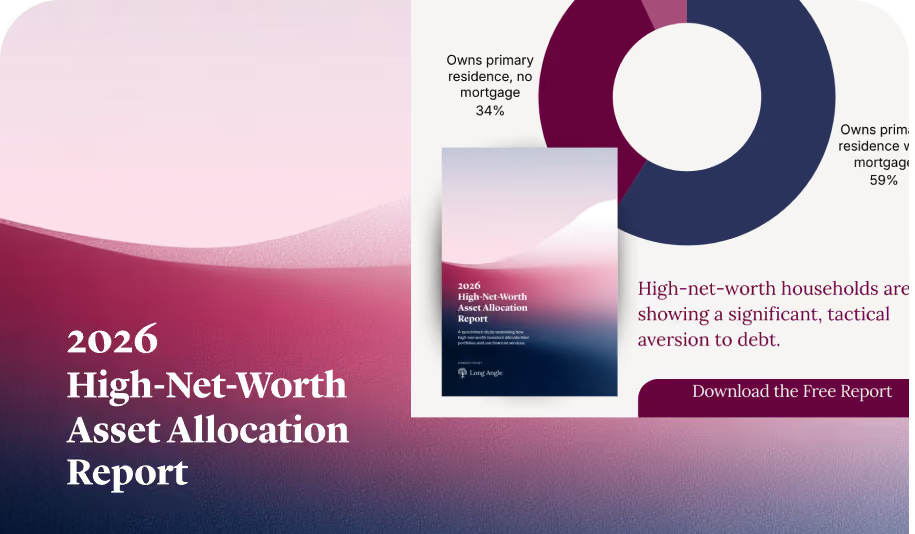
2026 High-Net-Worth Asset Allocation Report
See how high-net-worth investors with an average net worth of $17M are allocating across public equities, private markets, real estate, bonds and cash. Based on benchmark data from 230+ respondents.
What is Impact Investing?
Impact investing prioritizes projects and enterprises that can deliver measurable impacts on issues ranging from climate change and renewable energy to education and healthcare. This investment strategy aims to bring positive social and environmental outcomes and financial gains.
Unlike philanthropy, impact investing is not about charity but an investment strategy that brings in financial returns. It’s an appealing combination for family offices looking to align their portfolio value with their principled values.
Impact investing represents a paradigm shift in the world of finance. The success of an investment is measured not only by the financial return but also by the positive change it facilitates.
Is Impact Investing Effective?
A sound impact investing strategy can achieve the dual goals of financial return and positive impact. According to the Global Impact Investing Network (GIIN), most impact investors meet or exceed their expectations.
However, the effectiveness of impact investing depends on rigorous due diligence, clear impact measurement criteria, and ongoing management. Fortunately, family offices are well-positioned to provide this expertise and engagement, given their longer-term investment horizons and more flexible criteria.
Impact Investing Examples
Here are some examples of areas where family offices and HNWIs can invest for positive impact:
- Renewable Energy Projects: Investing in wind and solar energy helps reduce dependence on fossil fuels and can offer competitive returns due to government incentives and the increasing efficiency of renewables.
- Affordable Housing: By investing in housing developments in Opportunity Zones, family offices can address homelessness and housing insecurity while benefiting from long-term returns and tax credits.
- Education Technology: Impact investments in ed-tech startups improve access to quality education across diverse socio-economic backgrounds, driving innovation in learning while capturing financial value.
- Sustainable Agriculture: Investing in sustainable farming practices can promote environmental health and meet the rising demand for organic products.
- Water Purification: By funding affordable water treatment tech, investors can address water scarcity and related health issues while tapping into financial growth streams.
Why is Impact Investing Important?
Impact investing represents a critical evolution in the investment landscape, particularly for family offices and accomplished individuals looking to align long-term financial strategies with broader global challenges.
Impact investing is important because it directs funds to:
- Address global challenges like climate change and poverty to foster societal and environmental improvements.
- Align investments with social values, contributing positively to important causes.
- Yield competitive returns tied to meeting social or environmental goals.
- Find novel investment opportunities that can perform beyond traditional assets, diversify portfolios, and potentially mitigate risks.
- Build more sustainable growth as an ongoing benefit aligned with generational wealth and legacy conservation.

What is Family Office Impact Investing?
Family office impact investing is the application of impact investment strategies by family offices established to manage the wealth of successful families. This form of investing is gaining traction among those motivated to use their wealth to effect create positive change without compromising financial returns.
An impact investing family office is well-positioned to leverage its resources, longer-term investment horizons, and relatively flexible investment criteria compared to institutional investors. This lets you invest directly in innovative projects and companies that share and promote your values.
Here are some best practices for family office impact investing:
- Direct Involvement: Family offices often engage directly in their impact investments, enabling close monitoring of impact and financial outcomes.
- Innovative Financing: You can participate in innovative financing schemes, like social impact bonds and blended finance, to support projects with social or environmental benefits.
- Collaborative Networks: Family offices increasingly collaborate and cooperate with NGOs and governments, enhancing impact and risk-sharing.
- Measuring Impact: Rigorous reporting of financial and impact results ensures transparency and accountability in family office impact investing.
Can Impact Investing Align with Traditional Family Office Investment Strategies?
For many family offices, traditional investment strategies focus on wealth preservation, growth, and risk management, often within conventional asset classes. The emergence of impact investing poses an intriguing question: can this socially and environmentally conscious approach align with traditional investment paradigms?
The answer is increasingly, “yes.” Here are some reasons why:
- Diversification: Impact investments across renewable energy and sustainable agriculture mitigate risk by diversifying across uncorrelated sectors and geographies.
- Long-term Value Creation: Impact investments tend to be long-term, aligning with family offices' focus on generational wealth and sustainable value.
- Alignment with Family Values: Impact investing enables family offices to align investments with ethical values and legacy goals.
- Performance: Impact investments can match or exceed traditional investments' returns, challenging the myth that social impact comes at the expense of financial gain.
How to Start Family Office Impact Investing
Here’s a step-by-step guide for family offices looking to integrate impact investing into their portfolios:
- Define Your Impact Objectives: Pinpoint the issues that align with your family's values.
- Educate and Align Your Team: Ensure each member in the office understands impact investing and shares common goals.
- Conduct Market Research: Explore sectors and locations where your impact investments could have the greatest effect.
- Develop an Impact Investment Policy: Craft a policy that covers asset allocation, risk tolerance, and return expectations.
- Identify Specific Investments: Seek particular opportunities that match your impact goals, like participating in social NGOs or environmental projects.
- Perform Due Diligence: Conduct thorough financial and impact evaluations to determine an investment's potential success and alignment with your portfolio.
- Measure and Manage Impact: Implement a system to track your investments' social and environmental effects and financial outcomes, adjusting as needed.
Types of Impact Investing
Impact investing comprises a wide range of investment vehicles and sectors, including:
Social Impact Bonds
These bonds fund projects that aim to achieve specific social outcomes, like improving education or helping troubled youth, and, ultimately, repay investors, often with interest.
Green Bonds
Endowed to fund projects with environmental benefits like renewable energy development, pollution prevention, and sustainable water management, these offer a way to invest in sustainability with solid financial returns.
Private Equity
Investments in larger companies with social or environmental missions.
Sustainable Startup Investments
Investments in early-stage companies with alternative energy, agricultural, or environmental missions can impact their success and lead to windfall profits if the startup succeeds.

Final Thoughts
Family office impact investing represents a powerful convergence of financial acumen and a commitment to positive societal and environmental change. As HNWIs and family offices increasingly seek to orient their wealth with their values, impact investing presents a strategic avenue to fulfill this goal.
Gain insight into the complexities of impact investment by accessing the collective wisdom and experience of high-net-worth peers. Apply to Long Angle today .
Frequently Asked Questions
What are the Average Impact Investing Returns?
Returns from impact investing vary widely depending on the sector, geographical focus, and the specific investment vehicle. In general, investments should deliver competitive financial returns in line with traditional investments in similar asset classes.
For example, according to a GIIN survey, the average returns for impact debt funds, based on market maturity, ranged from 8% to 11%.
What are the Challenges of Impact Investing for Family Offices?
There are two main challenges: measuring impact alongside financial performance and finding and vetting quality opportunities aligned with the family office’s interests.
What are Social Impact Investments?
Social impact investments are made to generate beneficial social outcomes along with financial returns. These can include investments in affordable housing, education, healthcare, and enterprises that directly address social issues.
Impact mandates still need independent diligence on every manager they back.
Long Angle negotiates allocations in private offerings on behalf of members, sends every manager a formal RFI and writes a memo that names the cons. Members review each one with no expectation to invest.
More From Long Angle
Beyond Wealth Newsletter
Navigating Wealth Podcast
Research & Studies
Alternative Investment Education
Blog