Written by Scott Nixon


SBLOC or Sell? How High-Net-Worth Households Borrow Against Their Portfolios
SBLOC or Sell? How High-Net-Worth Households Borrow Against Their Portfolios
When an SBLOC beats selling, how much to draw, what it costs, and what members borrow: median lines of $50,000 at $2M-$5M and $600,000 above $25M.
Scott Nixon
An SBLOC fits a temporary cash need with a dated repayment source and room to absorb a market drop; selling fits a permanent need or an overdue diversification, and a partial sale plus a smaller loan often beats either. Among Long Angle members who borrow, the median loan or credit line of any type is $50,000 at $2M to $5M in net worth, $300,000 at $5M to $10M, $350,000 at $10M to $25M and $600,000 above $25M, per our 2026 Financial Products Report (165 respondents). Portfolio lines are the most common type, held by 37% of borrowers.
Key Takeaways
- Borrow against a portfolio for a temporary need with a dated repayment source; sell for a permanent need or an overdue diversification, and model a partial sale plus a smaller loan.
- Size the draw from a stress test, not the approved line: a $900,000 balance on a $3M portfolio at a 50% advance rate hits a maintenance call after a 40% decline.
- Member medians for all loan types run $50,000 at $2M to $5M net worth, $300,000 at $5M to $10M, $350,000 at $10M to $25M and $600,000 at $25M+.
- SBLOC proceeds cannot buy securities, and some lenders bar further uses; confirm capital calls and other investment uses in writing.
- Borrowing defers the tax on a sale rather than erasing it, so it costs least when the loan is short.
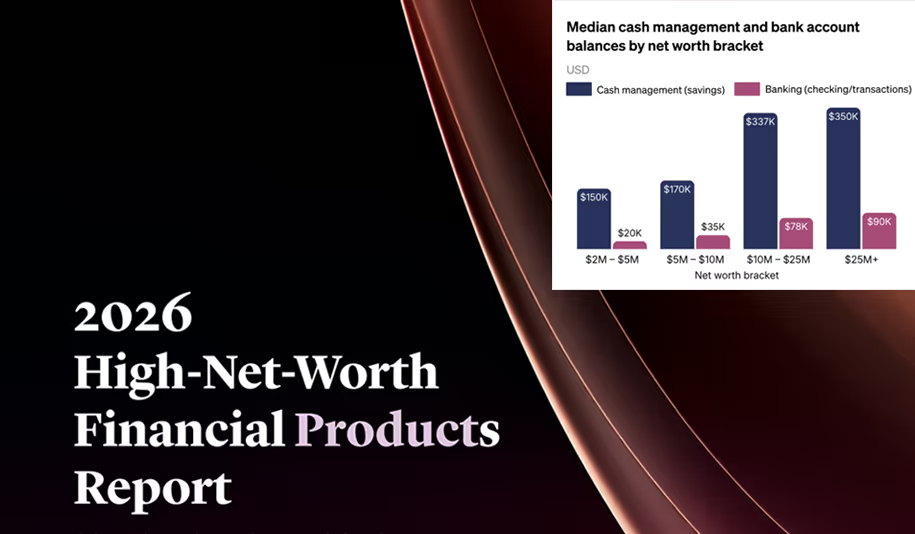
2026 High-Net-Worth Financial Products Report
See which banks, credit cards, brokerages, lenders and insurers high-net-worth households actually use and which they recommend. Based on insights from 165 investors, entrepreneurs and executives.
Borrow or Sell: The Short Answer
Borrowing against a portfolio solves a timing problem. It fits when the cash need is temporary, a dated source of repayment exists, and the portfolio can fall sharply without forcing a sale. Selling fits when the need is permanent, when a position is overdue for diversification, or when repayment depends on markets cooperating.
Most households should model four plans side by side: sell enough now, borrow the full amount, sell part and borrow less, or defer the expense. The third option is often the one that survives a bad market, and it is the one most often skipped. The test question for any loan is simple: what pays this off if the portfolio drops and the expected cash arrives late?
How Much High-Net-Worth Households Borrow
Among Long Angle members who borrow, loan size tracks wealth, with jumps at $5 million and $25 million. These medians cover every type of loan or credit line members reported, not SBLOCs alone, and they are not a recommended balance.
| Net worth | Median loan or credit line |
|---|---|
| $2M to $5M | $50,000 |
| $5M to $10M | $300,000 |
| $10M to $25M | $350,000 |
| $25M+ | $600,000 |
Source: Long Angle 2026 High-Net-Worth Financial Products Report, 165 respondents, fielded July 2026. Median of reported loan or credit line amounts among members who borrow, all loan types. US respondents only.
Members describe using lines as short-term liquidity: draw the funds, then repay when other cash arrives, such as proceeds from a stock sale. The full distribution, including loan types and lenders, is in our research finding on how high-net-worth households borrow against their portfolios.
What Members Borrow For
The most common reasons are buying a home and making another large purchase, not leveraging the portfolio itself.
| Purpose | Share of borrowers |
|---|---|
| Home purchase | 29% |
| Other large purchase | 28% |
| Portfolio leverage | 26% |
| Business opportunities | 23% |
| Home renovation | 23% |
| Tax payments | 20% |
| Capital calls | 15% |
Source: Long Angle 2026 High-Net-Worth Financial Products Report, 165 respondents, fielded July 2026. All loan types. Borrowers could select more than one purpose, so shares total more than 100%. US respondents only.
Two rows are specific to people with private investments and concentrated wealth: one in five borrowers used a loan to pay taxes, and 15% to meet capital calls. Those figures describe what members did across all loan types. They do not show that a standard SBLOC permits either use; the section on permitted uses below covers that.
What an SBLOC Is
A securities-based line of credit, or SBLOC, is a revolving loan secured by the investments in a brokerage account. You keep the holdings invested and the lender takes a pledge on the account. Schwab calls its version a Pledged Asset Line; Fidelity arranges lines through third-party banks. Interest is charged only on what you draw, and most lines require monthly interest payments with principal due when you repay.
Three numbers are easy to confuse. Market value is what the investments are worth. Lending value is what the lender recognizes after excluding ineligible holdings and applying advance rates. The balance is what you have borrowed. A $2 million portfolio, a $1 million approved line and a $200,000 balance are three different things.
An SBLOC is one of several ways members borrow. Portfolio lines and margin loans are held in close to equal measure:
| Type of loan or credit line | Share of borrowers |
|---|---|
| Portfolio line (PLOC, PAL or SBLOC) | 37% |
| Margin loan | 35% |
| HELOC | 32% |
| Personal loan | 12% |
| Other | 9% |
| Box spreads | 3% |
Source: Long Angle 2026 High-Net-Worth Financial Products Report, 165 respondents, fielded July 2026. Borrowers could select more than one type, so shares total more than 100%. US respondents only.
A margin loan sits inside the brokerage account, can fund securities purchases, and can also be drawn as cash. An SBLOC cannot be used to buy securities. Compare the two as written proposals rather than assuming a bank line is the safer product.
How Much You Can Borrow, and How Much to Draw
Lending value depends on what you hold. A 2015 SEC and FINRA investor alert gives typical advance rates of 50% to 65% for stocks, 65% to 80% for corporate bonds and 95% for US Treasuries. Those are educational ranges, not a quote; each lender sets its own.
| Eligible holding | Market value | Assumed advance rate | Lending value |
|---|---|---|---|
| Diversified stocks | $2,000,000 | 50% | $1,000,000 |
| Corporate bonds | $500,000 | 65% | $325,000 |
| US Treasuries | $500,000 | 95% | $475,000 |
| Total | $3,000,000 | 60% | $1,800,000 |
Source: Hypothetical illustration using the low end of the SEC and FINRA advance-rate ranges (Investor Alert, December 21, 2015). Assumes every holding is eligible.
Not everything counts. Schwab and Fidelity both exclude retirement assets, and lenders decide at their discretion which securities qualify. Founders and executives should ask specifically about concentrated positions, restricted or control stock and private shares, which often receive little or no lending value on a standard line. A household with $15 million of net worth may have only a few million of eligible collateral once the business, real estate and retirement accounts are set aside.
The approved line is a ceiling, not a recommendation. Set the balance from a stress test instead: planned debt should stay below the lending value you would have after a severe decline, minus a reserve. On a $3 million portfolio, a $300,000 draw starts at 10% of market value and rises to about 17% after a 40% decline. A $1.5 million draw starts at 50% and rises to 83%.
What Happens to an SBLOC if the Market Drops
The loan does not shrink when the collateral does. The hypothetical below assumes a $3 million portfolio, a $900,000 balance and a 50% lending value throughout:
| Portfolio decline | Portfolio value | Debt as share of value | Lending capacity at 50% | Headroom or shortfall |
|---|---|---|---|---|
| 0% | $3,000,000 | 30.0% | $1,500,000 | $600,000 |
| 20% | $2,400,000 | 37.5% | $1,200,000 | $300,000 |
| 40% | $1,800,000 | 50.0% | $900,000 | $0 |
| 50% | $1,500,000 | 60.0% | $750,000 | -$150,000 shortfall |
Source: Hypothetical illustration. Ignores accrued interest, fees and differences in advance rates between holdings.
At a 50% decline, the borrower faces a maintenance call. The SEC and FINRA alert says the window to respond is typically two or three days. The cure comes in three sizes, which is why the plan has to exist before the call does:
- Repay $150,000 in cash from outside the pledged account.
- Pledge $300,000 of additional eligible securities at a 50% advance rate.
- Sell $300,000 of pledged securities, because each dollar sold also removes 50 cents of lending value.
Two further risks compound the first. A lender can cut advance rates in a falling market, so capacity can shrink faster than prices. And the lender controls the sale: Schwab describes its Pledged Asset Line as uncommitted, says it may demand full repayment at any time for any reason, and determines eligible collateral and loan value at its sole discretion. If you cannot meet a call, the lender can sell holdings of its choosing, which may also trigger capital gains tax.
What You Can and Cannot Use an SBLOC For
An SBLOC is a non-purpose loan: the proceeds cannot buy securities. Typical uses are real estate, renovation, tuition, taxes and business needs. The written agreement controls the details, and some restrictions go further than people expect. Schwab's terms, for example, bar using Pledged Asset Line proceeds to buy securities or spot cryptocurrency, to pay down margin loans, or to deposit into any brokerage account.
Capital calls deserve particular care. Whether a private fund call is a permitted use depends on the fund, the investment and the lender's terms, so describe the exact transaction and get the lender's confirmation in writing before you draw. If it is not permitted, fund the call another way. Never route proceeds through another account to change how the use appears.
What an SBLOC Costs Today
Rates float at a spread over SOFR, and the spread narrows as the line grows. Schwab publishes its schedule:
| Loan value of collateral at origination | Spread over SOFR | APR |
|---|---|---|
| $100,000 to under $250,000 | SOFR + 4.40% | 8.27% |
| $250,000 to under $500,000 | SOFR + 3.90% | 7.77% |
| $500,000 to under $1,000,000 | SOFR + 3.40% | 7.27% |
| $1,000,000 to under $2,500,000 | SOFR + 2.90% | 6.77% |
| $2,500,000 and above | SOFR + 2.40% | 6.27% |
Source: Charles Schwab Bank, Pledged Asset Line rates, SOFR as of October 19, 2026, read October 27, 2026. Rates exclude Investor Advantage Pricing discounts of 0.25% to 1.00% based on qualifying assets at Schwab. Lines begin at $100,000.
Schwab reserves the right to change the spread after a line is open, not only the SOFR component. Fidelity says its clients typically pledge at least $500,000, and that its lines carry no application, origination, annual or repayment fees. Our portfolio loan rate comparison sets these against margin and property-backed loans.
Budget at a higher rate as well as today's. Every two percentage points adds $10,000 a year on a $500,000 balance. And weigh the whole relationship: a rate discount that requires moving assets to a manager charging more elsewhere can cost more than it saves.
Borrowing Against Your Portfolio Instead of Selling: The Math
Borrowing defers the tax on a sale; it does not erase it. A hypothetical shows the trade:
- You need $500,000 and hold stock worth $500,000 that cost $100,000. Selling all of it realizes a $400,000 long-term gain. At the top federal rates of 20% plus the 3.8% net investment income tax, that is $95,200 of federal tax before any state tax, which leaves you short. To net the full $500,000 you would need to sell about $617,600.
- Borrowing $500,000 on Schwab's $500,000-to-$1 million tier at 7.27%, before relationship discounts, costs about $36,350 a year in interest.
- If you repay in a year from a bonus, a distribution or a planned sale, borrowing cost about $36,350 and the tax is still owed whenever you sell. If the loan stays open five years, the interest is about $181,750, and the tax still comes due unless the shares are held until death.
So borrowing is cheapest when the loan is short and the repayment source is already dated. A partial sale plus a smaller loan often splits the difference: it pays some tax now, keeps the balance well inside the stress budget, and shortens the time the loan stays open.
Watch for drift. Drawing $100,000 a year for five years without repaying principal leaves a $500,000 balance, and at 7% the fifth year's interest alone is $35,000. A line used for ongoing spending is a growing liability, not a bridge.
Which Lenders High-Net-Worth Borrowers Use
Brokerages lead portfolio lending for this group. Schwab and Fidelity are the two most used lenders among members who borrow, and most of their borrowers would recommend them.
| Lender | Share of borrowers | Would recommend | Median loan or line |
|---|---|---|---|
| Schwab | 17% | 91% | $160,000 |
| Fidelity | 11% | 86% | $650,000 |
| J.P. Morgan / J.P. Morgan Private Bank* | 6% | 100% | $1.1M |
| Frec* | 6% | 100% | $50,000 |
| Other | 66% | 66% | $250,000 |
Source: Long Angle 2026 High-Net-Worth Financial Products Report, 165 respondents, fielded July 2026. All loan types. * Low respondent count; read with caution. Borrowers could use more than one lender. US respondents only. Frec is a Long Angle partner, and Long Angle receives referral fees from some partners.
J.P. Morgan clients reported the largest lines by far, though from a small number of respondents. A recommendation rate measures service, not price: a Schwab borrower and a Fidelity borrower each described their rates as noncompetitive. One member's advice for anyone opening a line was two words: shop lenders. Get written proposals from your current custodian and at least two others, on the same holdings and the same requested amount. Our guide to high-net-worth lending covers the other loan types.
Buy, Borrow, Die: What the Strategy Leaves Out
Buy, borrow, die describes holding appreciated assets for life, borrowing against them for spending, and leaving them to heirs. Under section 1014 of the tax code, inherited property generally takes a basis equal to its value at death, so gains built up during the owner's life are not taxed as income. The basis can also step down if the asset has fallen in value.
The tax rule does not make the debt disappear. The loan is still repaid from the estate, interest compounds for as long as it is open, and every maintenance call along the way is a chance for a forced sale that defeats the point. Many lines are full-recourse, so the borrower is responsible for any shortfall regardless of collateral value. Treat the phrase as a description of a tax rule, not a financing plan, and run any version of it past a tax advisor and an estate attorney.
Questions to Ask Before You Sign or Draw
- Can you confirm in writing that my intended use, described exactly, is permitted?
- Which of my holdings count, at what advance rate, and how are concentrated, restricted and private positions treated?
- Is the line committed or uncommitted, and what can you change without notice: advance rates, spreads, eligible collateral?
- At what account value does a maintenance call trigger, how long do I have, and can you sell without contacting me?
- What fees apply to the undrawn and drawn line, and what discount applies to my assets with you?
- Can I trade, rebalance or withdraw dividends from the pledged account, and what happens if I move firms?
- If a trust or LLC owns the assets, who is the borrower, who is the pledgor and who is personally liable?
- Who is compensated if I borrow rather than sell, and how?
Final Thoughts
An SBLOC buys time, and it is worth what the time is worth. It works when the need is temporary, repayment is dated and the portfolio can absorb a sharp decline without a forced sale. Before you draw, get the permitted use, the collateral schedule and the lender's demand rights in writing, model a 40% to 50% decline, and compare the loan against a partial sale. Then decide how the loan ends before you open it.
Frequently Asked Questions
What is an SBLOC?
A securities-based line of credit is a revolving loan secured by the investments in a brokerage account. You keep the holdings invested and borrow against their lending value, usually at a variable rate over SOFR. Schwab calls its version a Pledged Asset Line.
How much can I borrow against my portfolio?
It depends on what you hold. The SEC and FINRA give typical advance rates of 50% to 65% for stocks, 65% to 80% for corporate bonds and 95% for US Treasuries. Retirement assets are excluded, and concentrated or restricted stock may count for little or nothing.
Can I use an SBLOC for a capital call or to buy stocks?
Not to buy securities: an SBLOC is a non-purpose loan. Whether a private fund capital call is permitted depends on the investment and the lender's terms, so get the lender's confirmation in writing before drawing.
Is it better to borrow against stocks or sell them?
Borrowing fits a temporary need with a dated repayment source; selling fits a permanent need or a position that should be diversified. Borrowing defers the tax rather than erasing it, so it costs least when the loan is short. A partial sale plus a smaller loan is often the strongest option.
What happens to an SBLOC if the market drops?
If the pledged account's lending value falls below the balance, you receive a maintenance call and typically have two or three days to add collateral or repay. Otherwise the lender can sell holdings of its choosing, which may trigger capital gains tax.
Weighing whether to borrow or sell and want a second opinion?
Long Angle is a free, vetted community of entrepreneurs, executives and investors with more than $3 million in household assets, comparing notes on investing, tax, advisors and family decisions.
More From Long Angle
Beyond Wealth Newsletter
Navigating Wealth Podcast
Research & Studies
Alternative Investment Education
Blog