Published


Is Vistage Worth It? Benefits, Alternatives, and FAQ
Is Vistage Worth It? Benefits, Alternatives, and FAQ
Is Vistage worth it? Learn about fees, benefits, reviews, and alternatives to see if it's the right community for you.
Vistage is worth it for CEOs and business owners who want structured accountability for operating decisions, and a poor fit for people whose hardest decisions have moved from the company to their personal balance sheet. Membership costs $2,500 to join plus $1,380 a month for the flagship CEO program, about $16,560 a year. Members meet a full day each month in a group of 12 to 16 non-competing leaders, with monthly one-to-one coaching from a paid Chair. Value depends heavily on that Chair and on group composition.
Key Takeaways
- Vistage’s flagship Chief Executive program requires a company with $5M or more in annual revenue. There is no personal wealth test and no age limit.
- The cost is $1,380 a month plus a one-time $2,500 initiation fee, so the first year runs about $19,060.
- Groups hold 12 to 16 non-competing leaders and meet for a full day each month, longer than most peer formats.
- Chairs are independent contractors who build and retain their own groups, which makes Chair quality the largest single variable in what a member gets.
- Published membership terms require 90 days’ notice to cancel after the initial period.
- The model is built for the active operator. Vistage has no equivalent of YPO Gold for members who sell or step back.
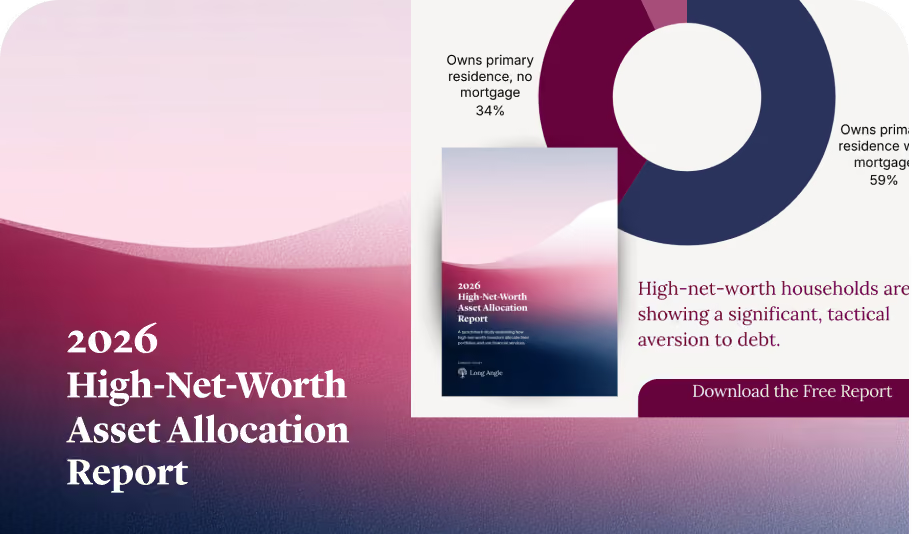
2026 High-Net-Worth Asset Allocation Report
See how high-net-worth investors with an average net worth of $17M are allocating across public equities, private markets, real estate, bonds and cash. Based on benchmark data from 230+ respondents.

What Is Vistage?
Vistage is a paid CEO coaching and peer advisory organization founded in 1957, serving leaders of small and midsize companies through facilitated monthly groups.
Vistage reports a membership above 45,000 across 40 countries, and says it has coached over 250,000 executives in its 65-year history. The flagship Chief Executive program is what most people mean by Vistage. Separate programs serve key executives, emerging leaders and small-business owners, each at a different price and commitment.
The product is not a membership directory. It is a recurring meeting: the same group of leaders, the same facilitator, every month, with the explicit job of working on decisions rather than collecting contacts.
Vistage Membership Requirements
The flagship Chief Executive program requires you to lead a company with at least $5M in annual revenue. There is no personal wealth test.
Vistage screens on four things: your role, your company’s scale, your willingness to commit the time, and your fit with a specific local group. A regional representative and a Chair assess that fit before you are placed.
- Role. CEO, founder, president or business owner with real decision authority.
- Company scale. $5M+ in annual revenue for the Chief Executive program. Vistage’s own materials describe member companies ranging from roughly $5M to $1B+.
- Non-competition. No two competing companies are placed in the same group. This is a core product promise rather than an informal norm.
- Group fit. Assessed by the Chair, who decides whether you join their group.
That last criterion carries more weight than it appears to. Because eligibility is broad, a $6M local business owner and the CEO of a $400M company can both qualify for the same program, and only the matching process keeps a group coherent.
How Much Does Vistage Cost?
Vistage charges a one-time initiation fee of $2,500 plus ongoing monthly dues. For its flagship CEO peer groups, Vistage publishes a figure of $1,380 per month, which works out to roughly $16,560 a year, or about $19,060 in the first year once the initiation fee is included.
The full picture by program:
- Initiation fee: $2,500, paid once on joining.
- CEO Peer Groups: $1,380 per month, about $16,560 a year. This is the flagship program for CEOs and business owners, and it covers monthly peer advisory meetings, full-day workshops with expert speakers, and one-to-one coaching sessions with a Vistage Chair.
- Emerging Leaders and Key Executive programs: lower than the CEO tier. Vistage does not publish a price for these, and independent reports commonly put them in the $5,000 to $10,000 a year range.
- Executive coaching programs: specialized one-to-one coaching that adds cost on top of group membership. Fees are quoted individually and vary widely.
Two caveats worth knowing before you budget. Vistage does not publish one fixed national price, so the figure a prospective member is quoted varies by Chair, by group and by region. And the initiation fee makes year one materially more expensive than the years that follow, which is easy to miss when comparing annual dues across peer organizations. Figures above are Vistage’s own published numbers, checked September 2026.
Inside a Vistage Group: The Meeting and the Chair
A Vistage membership is one full-day group meeting each month with 12 to 16 non-competing leaders, plus a monthly one-to-one session with your Chair.
The full day is the part prospective members underestimate. Most peer formats run three or four hours. Vistage asks for a working day every month, and the case for that length is that issue processing, where one member brings a real decision and the group works it, needs room to get past the first answer.
Meetings often include a subject-matter expert workshop. Between meetings the Chair provides one-to-one coaching, usually one to two hours. Vistage says Chair candidates typically bring 10 or more years of executive experience and have led 25 or more people.
Chairs are independent contractors. They recruit, build and retain their own groups, which is worth understanding before reading a Chair’s enthusiasm as a neutral assessment of fit.
Vistage Reviews: What Members Say
Reviews split on one variable more than any other: the Chair. A strong Chair produces the outcomes Vistage markets. A weak one produces an expensive recurring calendar commitment.
The positive case is about discipline. Senior leaders get pulled into urgent work, and a standing full-day commitment forces recurring time for strategic thinking with people who have no stake in the answer. Members who value Vistage tend to describe that structure rather than the content.
The critical case appears consistently in public forums, where members describe Vistage as an expensive way to meet people and question whether the coaching justified the price. Both accounts can be true, because the variable producing them is local rather than national.
Vistage cites Dun & Bradstreet comparisons in its own materials: member companies grew 2.2x faster than comparable non-members in 2017, and in 2020 member companies grew revenue 4.6% while comparable non-members declined 4.7%. Treat these as evidence rather than proof. Members self-select into Vistage, and leaders who commit a day a month to working on the business may differ from those who do not in ways the comparison cannot isolate.
Where Vistage Falls Short
Four failure modes show up consistently: Chair dependence, group variability, the cancellation terms, and a model organized around the operating company.
- Chair dependence. One person determines most of what you get. Meet the actual Chair before committing, not a regional representative.
- Group variability. A $5M threshold admits a wide range of company size and sophistication. Ask to meet several current members of the specific group.
- Cancellation friction. Vistage’s published membership terms require 90 days’ notice after the initial period. Read the agreement for your jurisdiction before signing.
- Operating-company bias. The product assumes your hardest decisions are about the business. Once they move to your personal balance sheet, the room loses relevance.
That last point is the structural one. Vistage has no equivalent of YPO Gold, no continuation path for members who sell, step back or stop operating. The value proposition holds while you have leadership decisions to process, and thins once you do not.
How Vistage Compares to YPO
YPO is the comparison most prospective Vistage members raise, and the two solve different problems. YPO is a selective global community for chief executives under 45, qualifying on leadership achievement and hard company thresholds. Vistage is a structured coaching system for active operating leaders, qualifying on company revenue alone.
The full side-by-side, including what each costs, how the groups are run and where Long Angle fits, is in our Vistage vs. YPO comparison.
Vistage Alternatives for Wealth-Focused Peers
The three organizations ask different qualifying questions, and the answer determines who sits in the room with you.
YPO asks whether you are an accomplished chief executive. Vistage asks whether you are running a meaningful business and want to run it better. Long Angle asks a third question: has your wealth become complex enough that the decisions around it are genuinely hard?
That produces a different room. Neither YPO nor Vistage applies a personal wealth test, so a group can be full of accomplished operators where nobody else has faced the decision you brought. For a founder whose company has sold, or an executive whose equity has vested into a balance sheet they now have to manage, that gap is the whole problem.
Long Angle qualifies members on investable assets rather than job title: $3M or more, excluding a primary residence, with illiquid assets counted. Trusted Circles, its peer advisory format, places 6 to 8 members into a confidential group matched by life stage, net worth and goals, meeting monthly for three hours with a professional moderator and a twelve-month minimum commitment. Long Angle membership is free to join; Trusted Circles is a separate $4,500 a year, covering the moderation and program design. Every member agrees to a no-solicitation policy.
The questions that get asked in that room are not CEO coaching questions:
- How much liquidity did you keep after your exit, and do you regret the number?
- Did you set up the trust before or after the liquidity event?
- How much of your portfolio sits in private markets, and how do you diligence a fund?
- At what point did a family office stop being overhead?
- How did you handle QSBS?
- How much are you giving your children, and when do you tell them?
If your hardest decisions are still about the company, Vistage is the better fit and YPO is the stronger community. If they have moved to what the company produced, a room organized around wealth complexity is the one worth finding.
Final Thoughts
The decision is less about price than fit. At this scale $16,560 a year is small against the value of one good call, and wasted at any price if the room cannot help with the decision in front of you. Test the specific group rather than the brand: meet the Chair, meet two or three members, and ask what each of them brought to the room in the last six months. If every answer is an operating problem and yours is a balance-sheet problem, you have learned what you needed to know.
Frequently Asked Questions
How much does Vistage cost?
Vistage costs $2,500 as a one-time initiation fee plus $1,380 a month for the flagship CEO program, roughly $16,560 a year. Pricing varies by program and region.
What are the Vistage membership requirements?
The Chief Executive program requires you to lead a company with $5M or more in annual revenue. There is no age limit and no personal wealth requirement.
Is Vistage worth it?
Vistage is worth it for active CEOs who want structured accountability on operating decisions. It fits poorly once your hardest decisions concern personal wealth rather than the company.
What is the difference between Vistage and YPO?
Vistage is a coaching system for active operating leaders with a paid facilitator. YPO is a selective global community for chief executives under 45, led by trained member moderators.
Can you cancel a Vistage membership?
Vistage’s published membership terms require 90 days’ notice to cancel after the initial commitment period. Terms vary by jurisdiction, so read the agreement you are asked to sign.
How long do Vistage members stay?
Vistage reports that CEO members stay more than five years on average. Retention is evidence of recurring utility, though members who stay are not a random sample.
Who leads a Vistage group?
A Vistage Chair, typically a former executive with 10 or more years of leadership experience. Chairs are independent contractors who recruit and build their own groups.
Most executives have peers at work; few have peers at their wealth stage.
Long Angle is a free, vetted community of founders, executives and investors who compare notes on tax, allocation, advisors and life after an exit, with no one in the room selling anything.
More From Long Angle
Beyond Wealth Newsletter
Navigating Wealth Podcast
Research & Studies
Alternative Investment Education
Blog