Published


High-Net-Worth Lending Explained
High-Net-Worth Lending Explained
Discover the benefits and nuanced strategies of high-net-worth lending. Make your wealth work harder for you.

High-net-worth (HNW) individuals enjoy abundant benefits when it comes to obtaining loans, but there are also special challenges.
Whether you are seeking to finance properties, purchase a jet, or invest in new ventures, thoughtful high-net-worth lending strategies can help you leverage HNW loans to enhance your financial growth and stability.
It’s also worthwhile to learn from peers who face similar challenges by joining Long Angle’s community of high-net-worth individuals.
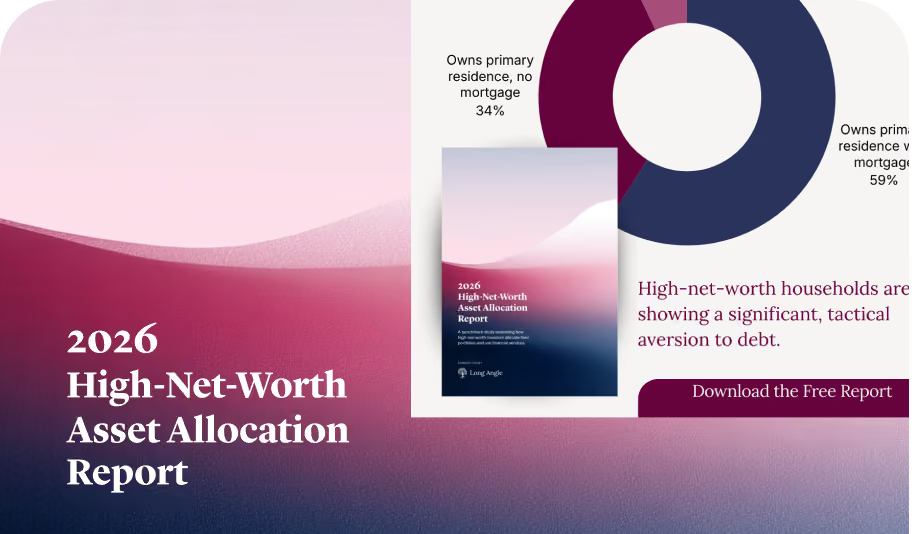
2026 High-Net-Worth Asset Allocation Report
See how high-net-worth investors with an average net worth of $17M are allocating across public equities, private markets, real estate, bonds and cash. Based on benchmark data from 230+ respondents.

What is High-Net-Worth Lending?
HNW lending refers to loans designed for individuals with significant assets that are not adequately served by conventional lending products. Unlike standard loans, these financial products and services are tailored to accommodate the distinctive needs of wealthy clients. They involve larger amounts, more complex underwriting processes, and, usually, more favorable terms.
Loans for HNW individuals consider not just income but assets: investments, real estate, and other holdings. Financial institutions recognize these clients as the most desirable and cater to their sophisticated requirements with keen interest.
You should take full advantage.
What Are Wealth Management Loans?
Wealth management loans are specialized financing solutions for high-net-worth individuals looking to leverage their assets for additional liquidity without liquidating assets. These loans allow clients to access funds at better rates while keeping their investment positions and benefiting from potential market growth.
These loans are secured by the borrower's investment portfolios or other assets. This security allows for more favorable loan terms, including lower interest and flexible repayment options. The key advantage is access to cash for immediate needs—investment, expansion, or purchases—without disrupting your investment strategy.
Wealth management loans also offer tax benefits. By borrowing against your portfolio, you can avoid capital gains taxes incurred when selling assets, gaining liquidity at lower risk.
What Do Banks Classify as High-Net-Worth?
Banks typically classify individuals as high-net-worth based on their liquid assets, setting a threshold that qualifies them for specialized financial services. Generally, to pass this elite bar, you must have liquid assets ranging from $1 million to $5 million. Higher thresholds apply to Very (VHNW) and Ultra (UHNW) high-net-worth individuals.
The HNWI classification extends beyond simple asset totals to include a broader analysis of your overall financial situation, including income, investment portfolios, real estate holdings, and other assets. Banks use this tier to tailor elite services, such as access to a high net worth mortgage, specialized investment advice, and private banking services.
Understanding how banks classify high-net-worth can impact the financial services available to you and open doors to optimized banking solutions that enhance wealth growth, risk management, and financial efficiency.

Types of High-Net-Worth Loans
High-net-worth individuals have access to a wider variety of loan types on better terms than those available to the public.
Here are some common types:
High-Net-Worth Mortgages
Specifically designed for purchasing luxury properties, these often involve large loan amounts with tailored repayment terms.
Securities-Backed Lines of Credit (SBLOCs)
These allow individuals to borrow against the value of their securities without liquidating investments. They provide a flexible credit line for managing cash flow, making purchases, or covering short-term liquidity needs.
Art and Luxury Asset Loans
Specialized loans can be secured with non-financial assets like art collections or luxury vehicles. These loans are useful for individuals who want to leverage the value of assets without liquidating them.
Bridge Loans
HNW individuals can cover the gap between buying a new property and selling an existing one with short-term financing options.
Jet and Yacht Financing
Specialized loans are available to cushion the costs and complexities of financing high-value vehicles of various kinds.
Each of these loan types can be customized. Lenders catering to wealthy clients are ready to tailor terms to reflect their typically lower risk and higher worth.

Reasons Why High-Net-Worth Individuals Get Denied for Loans
Despite wealth and assets, high-net-worth individuals might be rejected for loans because of:
Insufficient Liquid Assets
Assets may already be tied up in investments, real estate, or other attachments. Lenders require sufficient liquid assets to cover loan repayments, and a lack of readily accessible funds can lead to a denial.
High Debt-to-Income Ratio
HNW individuals often leverage debt as an investment strategy. However, a high debt-to-income ratio can be a red flag for lenders, as it suggests potential difficulties in repayment.
Spotty Credit History
A history of late payments, defaults, or other negative marks on a credit report can impact anyone, including HNWIs. Lenders use credit history as a key indicator of borrower reliability.
Complex Financial Situations
The intricate financial portfolios of HNW individuals can work against them. Lenders may find it more challenging to assess risk due to complex income streams and asset structures, leading to rejections.
Regulatory Restrictions
Banks and financial institutions adhere to strict rules, and sometimes, these regulations can complicate approvals for wealthy clients with sophisticated finances.
By addressing these potential issues proactively—ensuring adequate liquidity, managing debt levels, and keeping a high credit score—you enhance your chances of loan approval.
Strategies to Secure Loans
Securing a high-net-worth loan involves strategic planning and a lucid understanding of how lenders assess wealth. Here are some strategies to improve your chances:
Demonstrate Sufficient Liquidity
Ensure you have enough liquid assets to cover potential loan payments. This might mean restructuring your portfolio to increase liquidity before applying. Demonstrating that you can cover loan interest and principal without selling off assets reassures lenders of your financial stability.
Optimize Your Debt-to-Income Ratio
Lower your debt-to-income ratio by paying down debts or increasing income flow. A lower ratio shows you can cover loan repayments, reducing lending risk.
Maintain a Strong Credit Score
Regularly check your credit report for inaccuracies. Pay bills and obligations on time. A high credit score shows reliability and competence in financial management.
Simplify Your Financial Situation
Consolidate accounts and streamline income sources to make it easier for lenders to assess your financial situation. A clear financial picture increases lender confidence in your loan application.
Leverage Private Banking and Advisor Ties
Take advantage of your relationships with private banks or wealth management firms. They have the personalized services and connections to get you better deals.
Provide Extra Collateral
Offering additional collateral can help secure a big loan. This collateral could be real estate, stocks, or other valuable assets, reassuring the lender of your commitment and financial capacity.
Engage with Specialty Lenders
Apply only to lenders specializing in high-net-worth lending. They have more flexibility in loan terms and a deeper understanding of HNW clients.

How to Choose a High-Net-Work Lending Strategy
Choosing the right lending strategy is crucial for HNW individuals to ensure that their financial actions align with immediate needs and long-term wealth management goals:
- Assess Financial Goals and Timeline: Clearly define your financial objectives and deadlines.
- Consider the Cost of Capital: Evaluate the cost of borrowing, including interest rates and fees. Weigh the cost of capital against potential returns on investment to ensure that borrowing at this time makes sense.
- Analyze Tax Implications: Understand how different loan options affect your tax situation and strategies. Work with a high-net-worth tax advisor to identify lending options with the most favorable tax conditions, reducing the net cost of borrowing.
- Evaluate Risk Tolerance: Carefully consider your ability to secure loans with personal assets. Understand the risks associated with collateral to reduce exposure.
- Seek Customized Lending Solutions: Opt for institutions that cater to your elite financial level, offering tailored products and services.
- Review Regularly: Financial markets and personal circumstances evolve, so review and adjust your lending strategies accordingly.

Final Thoughts
High-net-worth lending demands a nuanced understanding of financial products and strategies tailored to the unique needs of the wealthy. By implementing strategic lending approaches, you can leverage your assets to grow wealth and reduce risk.
For accomplished individuals who want more personalized guidance, Long Angle offers a HNW community where you can connect with likeminded people and join peer advisory groups in your fields of interest. We invite you to apply today.
Frequently Asked Questions
What Documentation is Required For High-Net-Worth Mortgages?
For high-net-worth mortgages, lenders typically require extensive documentation to verify your financial status: detailed tax returns for multiple years, bank and investment account statements, proof of assets, documentation of debt obligations, and information about any businesses you own, in whole or in part.
How Do High-Net-Worth Mortgages Differ From Conventional Mortgages?
HNW mortgages, unlike conventional mortgages, are exclusively extended to wealthy clients who purchase expensive properties or invest in large real estate projects. They offer larger loan amounts, more flexible repayment options, and lower interest rates. The application process can be more complex, with additional paperwork and more complex checks regarding assets, income, and other issues that affect the lender’s risk factors.
What Interest Rates Are Typical for High-Net-Worth Mortgages?
Interest rates for HNW mortgages vary widely based on the lender, the borrower's creditworthiness, the loan amount, and market conditions. However, as a rule, because of the substantial assets and excellent credit profiles that HNWI typically have, the rates are usually more competitive than those available in conventional mortgage products.
A lending quote sounds fair until you compare it with what peers were offered.
Long Angle is a free, vetted community of founders, executives and investors who compare notes on pledged asset lines, lenders and rates with peers who have made the same calls, and no one in the room is selling anything.
More From Long Angle
Beyond Wealth Newsletter
Navigating Wealth Podcast
Research & Studies
Alternative Investment Education
Blog