Written by Scott Nixon


High-Net-Worth Interest-Only Mortgages
High-Net-Worth Interest-Only Mortgages
A high-net-worth interest-only mortgage can enhance your portfolio and provide financial flexibility.
Scott Nixon

High-net-worth interest-only mortgages represent a powerful strategic financing option for wealthy individuals seeking to enhance their investment portfolios while maintaining financial flexibility. These mortgages offer unique terms that allow you to pay only interest payments first, without reducing the principal for years.
Keep reading to see how these special mortgages function, the benefits of interest-only mortgage products, and what to consider when evaluating these options.
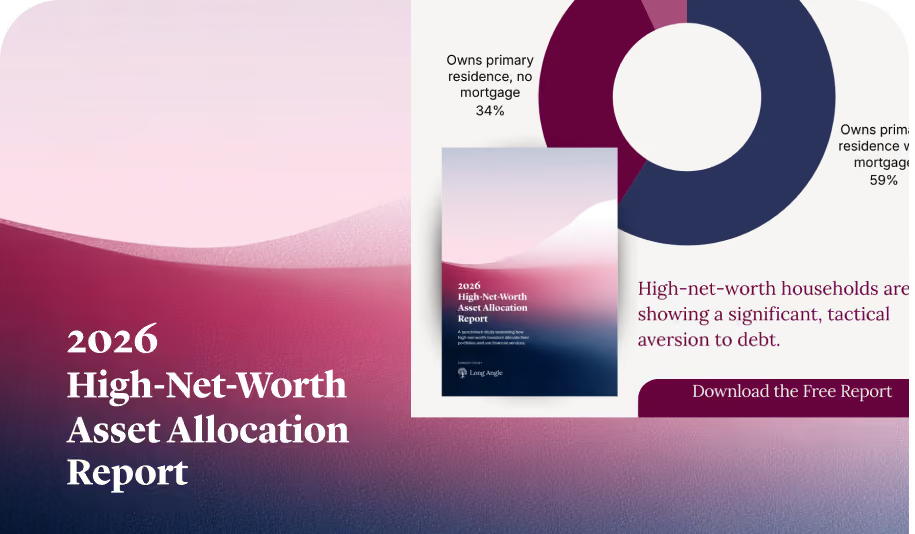
2026 High-Net-Worth Asset Allocation Report
See how high-net-worth investors with an average net worth of $17M are allocating across public equities, private markets, real estate, bonds and cash. Based on benchmark data from 230+ respondents.

What is an Interest-Only Loan Mortgage?
With an interest-only loan mortgage, the borrower must pay only the interest on the principal balance for a set period at the start of the loan term. This period typically lasts five to ten years. Unlike traditional loans that require payments toward both the interest and the principal, interest-only loans reduce your monthly financial burden during the interest-only period.
This arrangement can be advantageous for individuals anticipating higher future earnings or who can invest the saved capital in higher-return opportunities. For high-net-worth individuals, these loans offer a way to manage large-scale investments or property purchases without tying up cash flow, allowing for greater liquidity and flexibility in financial planning.
How Does an Interest-Only Mortgage Work?
The main appeal of an interest-only mortgage is its ability to free up cash for other investments, potentially with higher returns. This financial strategy benefits individuals with irregular income streams but substantial assets. It gives you more flexibility to manage your finances without being tied down immediately by large monthly payments.
After the interest-only period concludes, the mortgage reverts to a standard amortizing loan (unless it is refinanced or the property is sold). At this point, payments increase as they cover both the interest and the principal.
Therefore, you need to plan carefully for this transition to ensure that it aligns with your financial strategy and ability to keep up with higher monthly obligations. Careful planning and awareness of market conditions are needed to avoid “payment shock” and disruption of your overall wealth management goals.
What is a High-Net-Worth Interest-Only Mortgage?
A high-net-worth interest-only mortgage is a specialized financial instrument that caters specifically to individuals with significant assets, allowing them to benefit from the flexibility of paying only the interest on their loan for a set period, usually five to ten years. The exact range will depend on the lender’s specific terms and the borrower’s financial profile.
A high-net-worth mortgage option accommodates the larger loan amounts often required for luxury properties or major real estate investments.
HNW interest-only mortgages have two main benefits:
- They serve as an effective cash flow management tool, enabling you to minimize monthly outlays while maximizing liquidity so your funds can be applied to other activities.
- They often come with tailored features aligning with the complex financial portfolios typical of HNW individuals, including balloon payments or other refinancing scenarios.
How Long Can You Pay an Interest-Only Mortgage?
During the interest-only period, you don’t need to pay the principal at all. After the interest-only period ends, the mortgage converts to a conventional amortizing loan. Payments then apply to the principal and the interest, leading to higher monthly payments.
Plan strategically for this transition, as this upshift will increase your financial obligations. Some interest-only mortgages offer the option to refinance at the end of the interest-only period, extending the low-payment benefits. Or they may allow a lump-sum payment to settle the principal—a good strategy if you expect liquidity events.
Benefits of High-Net-Worth Interest-Only Mortgages
Improved Cash Flow Management
By paying only the interest on the mortgage during the initial term, borrowers can maintain higher liquidity. This benefits those with variable income streams or significant investments requiring flexible cash management strategies.
Investment Opportunities
The money saved on monthly payments can be redirected into potentially higher-yielding investments. This is particularly advantageous for wealthy individuals who often enjoy access to alternative investment channels with above-average returns.
Tax Efficiency
Interest payments on mortgages often can be deducted from taxable income—a big benefit for high earners.
Greater Financial Leverage
Interest-only mortgages allow for leveraging major property investments without the immediate burden of reducing the principal, which can help with real estate portfolio expansion or diversification.
Flexibility
These mortgages offer high flexibility, letting borrowers decide how to manage their capital outlays, such as planning for future income increases to cover principal payments after the interest-only period or coordinating actions with other financial events.

Risks Associated With Interest-Only Mortgages
While high-net-worth interest-only mortgages offer considerable benefits, they also come with risks:
- Interest Rate Risk: Since the principal is not reduced during the interest-only period, an increase in interest rates can increase the cost of borrowing, especially for a variable-rate mortgage.
- End of Term Risk: At the end of the interest-only period, the payment will increase substantially as you must start to pay down the principal. This can lead to payment shock, especially if your financial situation did not improve as anticipated.
- Property Value Risk: If the property value declines, you may find that your mortgage is larger than the property value, as no principal has been paid down. This situation, known as being "underwater," can complicate refinancing or selling the property.
- Refinancing Risk: Borrowers often plan to refinance at the end of the interest-only period. However, refinancing may not be possible if your credit status has changed, market conditions have shifted, or lending conditions have tightened.
- Reliance on Investment Performance: Borrowers may rely on investment returns from the capital freed up by lower mortgage payments. If these investments underperform, you may lack the funds to cover the higher payments due when the principal-plus-interest payment arrives.

How to Qualify for a High-Net-Worth Interest-Only Mortgage
Qualifying for a high-net-worth interest-only mortgage requires:
- Strong Credit Profile: Lenders typically require an excellent credit score to mitigate the risk of interest-only loans.
- Substantial Income Evidence: Demonstrating a high, stable income is crucial. Lenders will scrutinize your income sources to ensure you can shoulder the heavier burden when it’s time to pay the principal and the interest.
- Significant Asset Holdings: You need to show considerable assets beyond the property being mortgaged. An optimal allocation of assets can go a long way to reassuring lenders.
- Low Debt-to-Income Ratio: This ratio is critical to the approval process, demonstrating that you have enough income to cover your debts.
- Financial Advising: HNW financial advisors can assist in preparing the necessary documentation and ensure that your financial strategy aligns with the requirements for these loans.
Repayment vs. Interest Only-Mortgage
When deciding between a more standard repayment mortgage and an interest-only mortgage, you must consider your long-term financial goals and cash flow needs. A repayment mortgage steadily reduces the debt over time, leading to full ownership at the end of the term. This provides a clear path to debt-free property ownership and typically involves less total interest paid over the life of the loan.
Conversely, an interest-only mortgage reduces monthly payments initially, allowing for more liquidity and the opportunity to invest excess funds in higher-return ventures. But the principal remains unchanged, so expect an unpleasant bump further down the road.
Each option has its merits. The choice will depend on your financial stability, investment strategy, and risk tolerance.

Final Thoughts
Is an Interest-Only Mortgage a Good Idea?
Deciding if a high-net-worth interest-only mortgage is a good idea depends on your financial circumstances and goals. These mortgages offer substantial benefits, such as improved cash flow management and investment flexibility. However, they also carry heavy potential risks, like payment shock, over-dependency on property values, and unexpected market fluctuations.
To access a wealth of expert guidance and peer insights, apply to the Long Angle community. Here, you’ll find like-minded individuals happy to share their experiences and insights.
A mortgage quote means more once you see what peers were offered.
Long Angle is a free, vetted community of founders, executives and investors who compare notes on mortgage terms, lenders and rates with peers who have made the same calls, and no one in the room is selling anything.
More From Long Angle
Beyond Wealth Newsletter
Navigating Wealth Podcast
Research & Studies
Alternative Investment Education
Blog