Written by Scott Nixon


Is Long Angle Worth It? What Members Get and What It Costs
Is Long Angle Worth It? What Members Get and What It Costs
Long Angle is free to join from $3M in investable assets. What members get, what optional programs cost, how it makes money and who should skip it.
Scott Nixon
Long Angle is worth it for people seeking a vetted community of high-net-worth peers to compare notes and challenge each other’s thinking on decisions that come with significant wealth. Membership is free for people with more than $3 million in investable assets, excluding a primary residence. Members get an online community, in-person events, research and optional private-market investment opportunities, with paid programs such as Trusted Circles peer advisory groups. It suits people who value candid peer input while making their own decisions. It is a poor fit for anyone seeking clients, customers or capital. Long Angle strictly prohibits solicitation.
Key Takeaways
- Long Angle membership is free for people with more than $3 million in investable assets, excluding a primary residence, with no upper limit. Illiquid assets count, and every applicant's assets are verified.
- The core is a vetted online community where members ask each other questions under their real names by default; events, research and partner offers sit around it.
- Trusted Circles, small moderated peer groups, cost $4,500 a year with a 12-month commitment. Member-only retreats, Premier and partner offers carry their own costs.
- Long Angle makes money primarily from optional investment vehicles. No member has to invest, and Long Angle does not give investment advice.
- In an August 2026 poll of 294 members, the most-chosen area for Long Angle to do more was learning about complex financial and life decisions, at 58%.
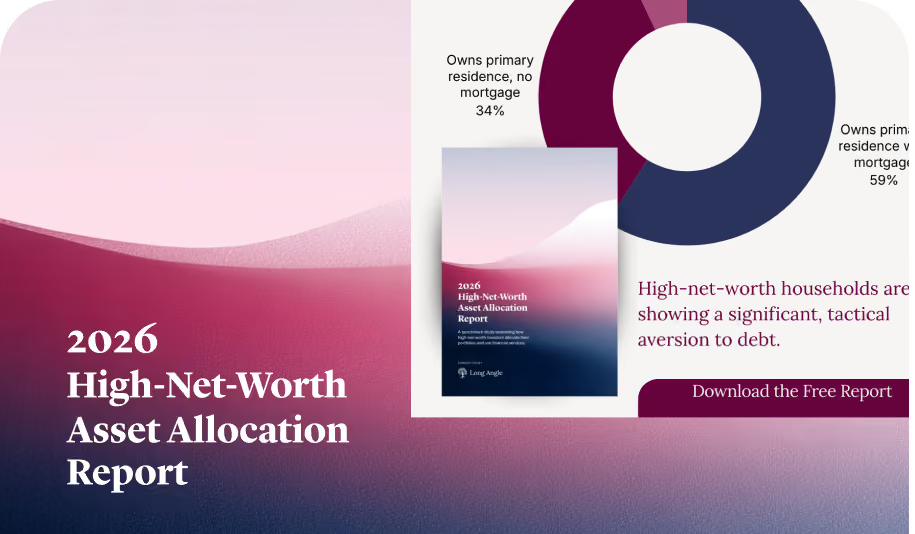
2026 High-Net-Worth Asset Allocation Report
See how high-net-worth investors with an average net worth of $17M are allocating across public equities, private markets, real estate, bonds and cash. Based on benchmark data from 230+ respondents.
What Long Angle Members Get
Long Angle members get a vetted online community, plus optional events, research, small groups, partner offers and investment opportunities. None of the optional parts is a condition of staying a member.
Source: Long Angle FAQ, How It Works and Trusted Circles pages, read October 2026.
Members choose how to participate based on their interests and schedule. The online community provides ongoing access to peer conversations and past discussions. Events, retreats and investing are optional.
What Long Angle Costs, and How It Makes Money
Long Angle membership is free. The company earns most of its revenue from optional investment vehicles, while programs such as Trusted Circles, retreats and Premier Membership carry separate costs.
Source: Long Angle FAQ and Trusted Circles pages, read October 2026.
A free membership funded by investment vehicles is a model worth understanding before you join. Long Angle's FAQ states that the company makes money primarily from optional investment vehicles, through a management fee on syndicated offerings, that no member is required to invest, and that all fees and partner relationships are disclosed. It also states that Long Angle does not provide investment advice. It supplies research, underwriting and education, and every decision stays with the member.
Members can use the free community without investing or purchasing a paid program. Those who want a consistent, moderated small group can join a Trusted Circle.
Who Qualifies and How Joining Works
Long Angle is open to people with more than $3 million in investable assets, excluding a primary residence, with no upper limit, who complete an application, a 25-minute conversation with an active member and asset verification. Assets held with a spouse or partner count, and so do illiquid assets such as rollover equity.
Source: Long Angle Apply, How It Works and FAQ pages, read October 2026.
No member nomination is required, although many members join through one. Members post under their real names, so everyone knows who is answering and why their experience counts. For a sensitive question, such as a divorce, an employment dispute, a theft or fraud loss, or a health matter, a member can ask to post anonymously. The team reviews each request, other members reply as they would to any post, and the author can keep their own replies in the thread anonymous. The community has four firm rules: confidentiality, no politics, no soliciting clients, and no promoting opportunities in which a member has a conflict of interest.
Leaving is simple. A member can leave at any time; the profile is deleted. Investment commitments follow their own legal terms. Long Angle never sells member data or shares it with partners.
Who Long Angle Is Not For
Long Angle is a poor fit for anyone seeking clients, customers or capital. Its strict no-solicitation policy helps members share candidly without being pitched services or investments.
Members must have more than $3 million in investable assets, excluding a primary residence, and be comfortable participating under their real names. Anonymous posting is available for sensitive questions.
Long Angle provides peer experience and perspective. It does not provide personalized investment advice. Members choose how involved to be, with optional paid Trusted Circles for those who want a consistent small group. In-person opportunities vary by location.
How Members Use the Community
Long Angle’s membership spans a diverse mix of professional backgrounds, including entrepreneurs, executives, physicians, attorneys, real estate investors and full-time investors. Members exchange firsthand experience on investing, professional services, family, career and other decisions that come with significant wealth. They ask questions, compare approaches and share what worked, what did not and what they would do differently.
- Finding a professional. A member needs a CPA, an estate attorney or an insurance broker and asks for names from members who have hired one, with what the work cost and how it went.
- Sanity-checking a decision. A member describes a situation, such as a Roth conversion plan, a portfolio line of credit or a trust structure, and asks whether others have done it and what they would change.
- Comparing notes in polls. Short member polls ask what peers hold, pay or use, and the larger surveys become Long Angle's benchmark reports.
That pattern shows up in the data. In a 2026 Long Angle poll of 116 members who had been through a liquidity event, asked how they found the right financial team, 38% chose recommendations from peers and 47% chose managing everything themselves, without a financial team. The poll is small and select-all-that-apply, so treat it as context.
The research is the most visible output. The 2026 High-Net-Worth Asset Allocation Report (233 respondents, fielded December 2025 to January 2026) and the 2025 High-Net-Worth Professional Services Report (114 respondents, fielded August to September 2025) are both built from member surveys. CNBC and Forbes have covered Long Angle research; the list is on the media page. Survey respondents are members who chose to take part, not a representative sample of wealthy households.
Long Angle Compared With Paid Peer Groups
Long Angle is free to join, with optional paid programs for members who want additional benefits or a consistent peer advisory group. Like TIGER 21, it bases eligibility on verified personal wealth rather than an executive role. Members choose how to participate, while TIGER 21 centers on a fixed group that meets for a full day each month.
Source: Each organization's own published figures, read 2026-10-06: tiger21.com membership FAQ, qualifications and code of conduct; ypo.org membership requirements and application. Long Angle FAQ and Trusted Circles pages. Prices change; check each organization's site before deciding.
The groups solve different problems. TIGER 21 builds a standing personal board above $20 million. YPO is built for sitting chief executives. Long Angle is a wider community for people with more than $3 million in investable assets, excluding a primary residence, with no upper limit and a membership mixed by profession, with a paid small-group option for members who want the same faces every month. For more groups side by side, see high-net-worth peer advisory groups, TIGER 21 alternatives and peer groups after selling a business.
How to Decide Whether Long Angle Is Worth It for You
Long Angle is most useful when you're facing decisions other members have already made and want candid perspectives to inform your own judgment. Peer experience can help you evaluate options, ask better questions of professionals and consider approaches you might otherwise miss.
Consider whether members' experience would be useful, whether you're comfortable participating under your real name and which formats fit your interests and schedule.
Applying takes about five minutes, followed by a 25-minute conversation with an active member. Membership is free, and you can participate as your interests and schedule allow. Apply to join Long Angle.
Frequently Asked Questions
Is Long Angle free?
Yes. There is no membership fee. Optional programs carry their own costs: Trusted Circles are $4,500 a year with a 12-month commitment, and member-only retreats, Premier Membership and partner offers are priced separately and disclosed. Long Angle makes money primarily from optional investment vehicles, and no member is required to invest.
Who can join Long Angle?
People with more than $3 million in investable assets, excluding a primary residence, with no upper limit. Assets held with a spouse or partner count, and so do illiquid assets such as rollover equity. Applicants complete a five-minute application, a 25-minute conversation with an active member and asset verification, and agree to a no-solicitation policy. No member nomination is required.
Does Long Angle give investment advice?
No. Long Angle provides research, underwriting and education, and all decisions stay with the member. It is not a wealth manager or financial advisor. Investing through Long Angle is optional, both for joining and for staying a member.
Who runs Long Angle?
Long Angle was founded by two entrepreneurs after a significant liquidity event. Its About page lists Tad Fallows and Sriram Gollapalli as Managing Directors. Its research has been covered by CNBC and Forbes.
How is Long Angle different from TIGER 21?
TIGER 21 requires at least $20 million in investable assets or qualifying net worth and, in North America, costs $34,000 a year plus a $5,000 initiation fee, for a standing group meeting a full day eleven times a year. Long Angle also admits on verified personal wealth: it is free to join with more than $3 million in investable assets, excluding a primary residence, with no upper limit and optional $4,500-a-year Trusted Circles. Both fit founders who are still operating as well as those who have sold.
Is Long Angle legit?
Yes. Long Angle is a vetted community: every applicant completes a conversation with an active member and has their assets verified, and members post under their real names by default. CNBC and Forbes have covered its research. Membership is free, and members can leave at any time. Long Angle Management, LLC, an SEC-registered investment adviser, invests capital through special purpose vehicles on behalf of members who choose to invest.
A second opinion lands best from someone who made the same decision.
Trusted Circles put six to eight Long Angle members in a confidential room with a professional moderator, three hours a month by Zoom. It is a separate program at $4,500 a year.
More From Long Angle
Beyond Wealth Newsletter
Navigating Wealth Podcast
Research & Studies
Alternative Investment Education
Blog