Written by Scott Nixon


Founders Club Review: Membership Cost, Who It Fits and Alternatives
Founders Club Review: Membership Cost, Who It Fits and Alternatives
Founders Club costs $9,500 a year as reported in 2026. What it requires ($1M+ revenue), how its groups work, and how it compares with other founder groups.
Scott Nixon
Founders Club membership costs $9,500 a year, according to Inc. (August 2026) and Forbes (February 2026); the club does not publish its fee, and earlier members pay less. The Founders Club is a Miami-based community for founders and owners of active businesses, separate from the FoundersCard perks card. It asks for $1 million or more in annual revenue ($3 million for service businesses) and reviews each applicant for fit. Members meet monthly in facilitated groups of 8 to 12. It has no personal wealth requirement.
Key Takeaways
- Founders Club costs $9,500 a year as reported by Inc. and Forbes in 2026; the club does not publish its fee, term or cancellation terms, so get all three in writing.
- It qualifies you on the business: $1 million or more in revenue, or $2.5 million raised or exited, with $3 million for professional services and agencies.
- The core format is a monthly facilitated group of 8 to 12 founders, with 150+ events a year, a members' app and a retreat in Mexico.
- It is a different organization from FoundersCard, the perks card that shares many of the search results.
- Long Angle admits on verified personal wealth and is free to join, with optional Trusted Circles at $4,500 a year.
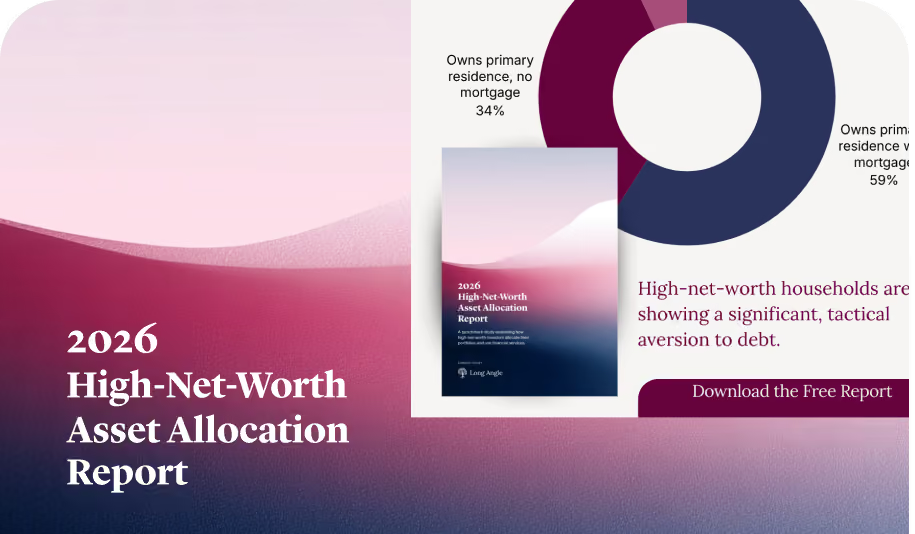
2026 High-Net-Worth Asset Allocation Report
See how high-net-worth investors with an average net worth of $17M are allocating across public equities, private markets, real estate, bonds and cash. Based on benchmark data from 230+ respondents.
What Founders Club Is, and What It Is Not
The Founders Club is a paid community for founders and owners of active businesses, run by Oak Club LLC in Miami. It was founded in 2023 by Aaron Spivak, who built the weighted-blanket company Hush, and Chris Meade, who built the game company CROSSNET. The club lists chapters in 12 North American cities, including New York, Miami, Los Angeles, Austin and Toronto.
The name is shared, which makes searching for it confusing. FoundersCard is a separate paid perks card, and several golf clubs, golf brands and donor societies also use "Founders Club". This review covers the founder community at foundersclubofficial.com.
Founders Club Membership Cost
Founders Club membership costs $9,500 a year, according to reporting by Inc. in August 2026 and by a Forbes contributor in February 2026. Forbes added that early, grandfathered members pay less. The club does not publish a price on its own site.
Inc. reported that the fee covers executive coaching, local networking and access to more than 150 in-person and virtual events a year. The club's membership page also lists monthly facilitated groups, an annual retreat, a flagship summit and a members' Slack and app. What the published material does not settle is the cost of travel and lodging for retreats, the length of the commitment, how renewal works and what happens if you cancel. The club's terms say only to contact it to discuss cancellation and refund options, so get all of it in writing before you pay.
Who Qualifies: Founders Club Requirements
Founders Club qualifies you on the business you run. Its membership page asks for a founder or owner of an active business with $1 million or more in annual revenue, or $2.5 million raised or exited, with $3 million in revenue for professional services firms and agencies. Forbes reported the same $1 million and $3 million thresholds.
The club also screens for "a proven track record of leadership, execution, and a growth mindset" and says it prioritizes fit. Its published criteria are about the business and the founder's record, with no personal wealth requirement. According to Meade, speaking to Forbes, the average member's business brings in $14 million a year.
How Founders Club Works: Groups, Events and Commitment
The core of membership is a monthly facilitated group of 8 to 12 founders, held in person or online. Around it, the club runs local dinners, larger gatherings under its Forum name, a retreat in Mexico each winter, separate workshops for men and women, and a members' Slack and app with a directory.
The club has not published a minimum attendance, meeting length or term. The value of a format like this depends on showing up to the same group month after month, so the practical question is whether your city has a group at your stage that meets at a time you can keep.
How Founders Club Compares with Other Founder Groups
Most founder groups admit on the company you run. Founders Club's revenue bar matches EO's and sits below Hampton's, Vistage's and YPO's, and it is open to founders in any industry.
| Who it admits | What qualifies you | Personal wealth requirement | |
|---|---|---|---|
| Founders Club | Founders and owners of an active business, any industry | $1M+ in annual revenue, or $2.5M raised or exited ($3M in revenue for professional services and agencies) | None published |
| EO | Owners, founders or majority stakeholders | $1M+ in revenue in the latest fiscal year; venture-backed companies qualify on capital raised, with 10+ employees | None published |
| Hampton | Founders, CEOs and owners of tech and digital-first companies | More than $3M in revenue, more than $3M raised, or a prior exit above $10M | None published |
| Vistage | CEOs and business owners | Built for leaders of companies with $5M+ in annual revenue | None published |
| YPO | Chief executives under 45 | Company size, such as 50 full-time employees and $16M+ in revenue for sales, service and manufacturing companies | None published |
| Long Angle | Founders, executives and investors, still building or after a sale | More than $3M in investable assets, excluding a primary residence, with no upper limit | Yes, verified |
Source: Each organization's own membership pages: Founders Club, EO, Vistage and YPO read October 28, 2026; Hampton read October 27, 2026; Long Angle: longangle.com.
None of the operator groups looks at the founder's own balance sheet. Long Angle is the exception in this list: it admits on verified personal wealth rather than on the company, so founders tend to use it alongside an operator group rather than instead of one. Cost, format and commitment across the wider field are in high-net-worth peer advisory groups compared.
Questions to Settle Before You Join
Most of what decides whether a membership gets used is not on the website. These are the questions worth putting to the admissions team before you pay.
- What will it cost in total? Ask for a written quote covering the annual fee, retreats and any events with their own charge.
- Who would be in my group? Ask for an anonymized profile of the group you would join: business model, revenue band and the problems members are working on.
- What runs in my city? Ask for the last three months of local events and the next three, with typical attendance.
- How do renewal and cancellation work? Ask for the membership agreement itself, including automatic renewal and notice periods.
- What stays private? Ask for the confidentiality and no-solicitation rules in writing, and how they are enforced.
- Do sponsors play any part? Ask whether sponsor payments, paid introductions or preferred partners shape introductions or recommendations.
- Can a spouse or partner attend? Ask which dinners, retreats and events are open to them, and at what cost.
Is Founders Club Worth It? Who It Fits
Founders Club fits a founder building a company at or above $1 million in revenue who wants peers working through the same growth problems, a regular group, and a busy calendar of events in a city where the club is active. It suits someone who will use the monthly group and the local events consistently.
It fits less well if you want a published price and terms before you apply, if you want a group limited to your industry or your company's size, or if you have sold and stepped back from operating, since the club's criteria assume an active business. Founders weighing groups after a sale will find the options in peer groups after selling a business.
The Wealth the Company Creates Is a Second Set of Decisions
Revenue measures the business; it says nothing about the founder's own balance sheet. That balance sheet tends to be concentrated. Respondents to Long Angle's 2026 Asset Allocation Report whose wealth came mainly from entrepreneurship hold 27% of their investment portfolio in private company equity, against 11% for other respondents.
| Primary source of wealth | Public equities | Private company equity | Investment real estate | Cash |
|---|---|---|---|---|
| Entrepreneurship | 35% | 27% | 15% | 10% |
| Other | 61% | 11% | 11% | 6% |
Source: Long Angle 2026 High-Net-Worth Asset Allocation Report, 233 respondents, average net worth about $17M, fielded December 2025-January 2026. Average share of investment portfolio, excluding home equity; alternatives and bonds not shown.
The full breakdown is in how much company stock founders and employees hold, and what founders pay advisors to manage the rest is in wealth management for business owners. After a sale, many founders build that side of their life on their own judgment: in a Long Angle member poll of 116 people who had been through a liquidity event, 47.4% said they manage everything themselves and 37.9% found their financial team through recommendations from peers.
Operator groups such as Founders Club, EO, Hampton, Vistage and YPO admit on role and company and have no personal wealth requirement. Long Angle vets on personal wealth instead: members qualify with more than $3 million in investable assets, excluding a primary residence, verified, with no upper limit, and membership is free. That makes it a place to compare notes on what comes after the company succeeds, with peers who have made the same decisions. Some members keep their operator group and add Long Angle. What to do after selling your business covers the months after the money lands.
Final Thoughts
Founders Club suits a founder running a company above $1 million in revenue who will show up to a monthly group and the local calendar. Before you join, get the full cost, the term and the cancellation terms in writing, and ask who would be in your group. The company it helps you grow is one set of decisions; the wealth that company creates is another, and some founders keep their operator group and add a community built for the second.
Frequently Asked Questions
How much does Founders Club membership cost?
$9,500 a year, according to reporting by Inc. and Forbes in 2026; earlier, grandfathered members pay less. The club does not publish its fee, so ask for the annual fee, retreat costs, term and cancellation terms in writing.
What are the Founders Club requirements?
You need to be the founder or owner of an active business with $1 million or more in annual revenue, or $2.5 million raised or exited, with $3 million for professional services firms and agencies. The club also reviews each applicant for fit. It has no personal wealth requirement.
Is Founders Club the same as FoundersCard?
No. FoundersCard is a paid perks card. The Founders Club is a founder community with monthly facilitated groups, local events and an annual retreat.
What are the alternatives to Founders Club?
Other operator groups, including EO, Hampton, Vistage and YPO, also admit on the company you run, with revenue bars from $1 million at EO to $16 million or more at YPO for most companies. Long Angle admits on verified personal wealth instead: more than $3 million in investable assets, excluding a primary residence. Membership is free, with optional Trusted Circles at $4,500 a year.
Want peers for the wealth decisions, not just the company?
Long Angle is a free, vetted community of entrepreneurs, executives and investors with more than $3 million in investable assets, comparing notes on advisors, tax, estate and what to do after a sale.
More From Long Angle
Beyond Wealth Newsletter
Navigating Wealth Podcast
Research & Studies
Alternative Investment Education
Blog