Written by Chris Bendtsen

One Stock, Most of Your Net Worth
One Stock, Most of Your Net Worth
How concentrated equity holders approached the sell, hold, tax and first-year decisions.
Chris Bendtsen
When one stock is most of your net worth, the decision is rarely all or nothing. Most holders resolve it in steps: selling part to take a severe decline off the table, keeping a deliberately sized remainder, and deferring tax through a structure or a charitable gift, with the plan written down before restrictions lift and the price moves. Several of the decisions that most affect the after-tax result also have deadlines that close before a sale, so the sequence matters as much as the total. As a gauge of how far to diversify, 60% of Long Angle members in a voluntary community poll said they would hold no more than 15% of their net worth in a single stock.
Key Takeaways
- Exposure to one company has three layers: vested shares, unvested awards, and the salary and future grants that depend on the same employer. Most holders track only the first.
- In a Long Angle poll of 286 members, 60% set their personal limit for a single stock at 15% of net worth or below, and 27% put it under 5%.
- RSUs are taxed as ordinary income when they settle and that value becomes the cost basis, so a sale soon after realizes little further gain; the larger capital gains sit in long-held, low-basis shares and exercised options.
- Several high-leverage moves close before a sale, including exercising incentive stock options (ISOs) across tax years, establishing residency, and estate transfers made before values rise.
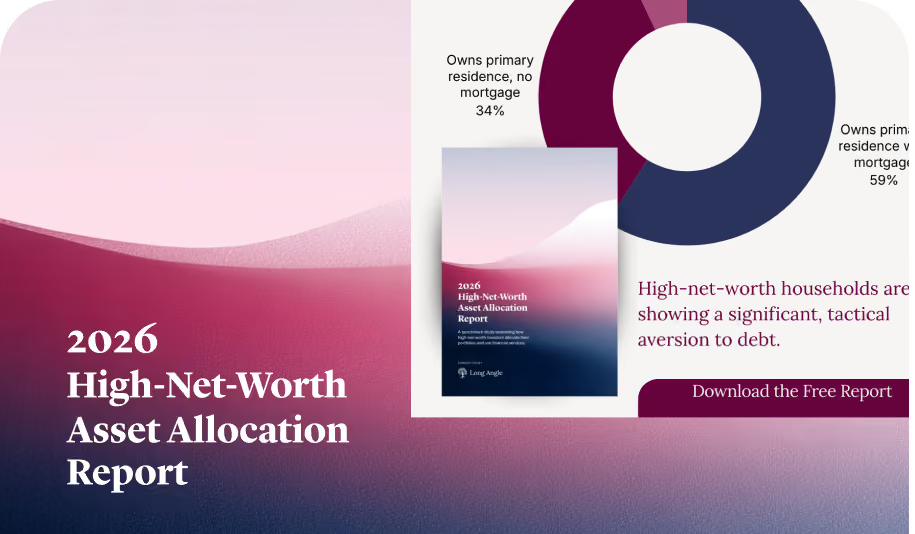
2026 High-Net-Worth Asset Allocation Report
See how high-net-worth investors with an average net worth of $17M are allocating across public equities, private markets, real estate, bonds and cash. Based on benchmark data from 230+ respondents.

How big the position really is
A concentrated position is usually larger than the brokerage balance suggests. Exposure to one company has three layers: vested shares; unvested awards that depend on the same company performing and on continued employment; and the salary, future grants and professional standing tied to the same employer. In a downturn all three can fall together. How large the position runs depends on how you hold the equity.
Asset Allocation Among Concentrated Equity Holders (% of Investable Net Worth)
Founders, owners and private-company employees carry the most concentrated positions. Because members reported against their most recent private valuation, an IPO that prices higher makes the true concentration higher still. So for many holders the figure at the moment of going public is a floor.
How much is too much
A useful test is a re-purchase question: if you held none of this stock today, how much of your net worth would you put into it at the current price? For many holders the answer is well below what they already hold, and the gap is the size of the diversification problem. Long Angle members were asked a version of this: the largest share of a portfolio they would hold in one stock and still sleep at night.
How Much HNW Investors Will Hold in a Single Stock
Sixty percent of members set the limit at 15% or below, and 27% put it under 5%. A position built through employment usually starts well above that, which is what makes the gap worth naming deliberately rather than defaulting into holding.
Sell, hold, hedge, diversify or give
A concentrated position is rarely resolved by one sale or one decision to hold. Holders usually sell some, keep some, and sometimes hedge, use a diversification structure or donate shares, and the plan works best written down before restrictions lift and the price starts moving. Each route carries a different purpose, tax question and failure mode.
Five Ways to Manage a Concentrated Position
What a sale costs depends on the type of equity: RSUs are taxed as ordinary income when they settle and that value becomes the cost basis, so a sale soon after realizes little further gain, while the larger capital gains sit in long-held, low-basis shares and exercised options. Two structures, a 351 exchange and an exchange fund, defer the gain without a sale, each with its own eligibility limits and lockups.
What closes before liquidity
Several of the decisions with the largest effect on after-tax wealth are easier, and sometimes only possible, before a sale. Exercising incentive stock options can be spread across tax years to manage the alternative minimum tax, and the 2026 rules made that more expensive. A change of residency to a lower-tax state has to be established well before a liquidity event to hold up. Estate transfers are most effective before the assets rise in value. And for households that already intend to give, donating appreciated shares rather than the proceeds of selling them reduces both the position and the tax bill in one step, with a donor-advised fund separating the timing of the deduction from the grants. Most advisor relationships begin after liquidity, by which point several of these moves have already closed.
Get the full guide and decision worksheet
Download the complete guide, One Stock, Most of Your Net Worth: How concentrated equity holders approached the sell, hold, tax, and first-year decisions.
The guide covers
- What to sell, keep, hedge, diversify and give.
- The tax moves that close before a sale.
- The first-year decisions.
- A worksheet for recording your position, deadlines and plan.
Final Thoughts
Methodology and limitations
This page draws on Long Angle's 2026 High-Net-Worth Asset Allocation Report (233 members, fielded December 2025 to January 2026) and a community poll of 286 members on single-stock tolerance. Respondents are voluntary participants in one community, not a representative sample of high-net-worth households. It is educational and is not investment, legal or tax advice.
Frequently Asked Questions
How much of my net worth is too much to hold in one stock?
There is no single number. In a Long Angle poll of 286 members, 60% said the most they would hold in a single stock and still sleep at night is 15% of their portfolio or less, and 27% put the limit under 5%. A re-purchase test helps: if you held none today, how much would you buy at the current price?
What decisions should I make before a liquidity event?
The moves with deadlines: sequencing incentive stock option exercises across tax years, establishing residency in a lower-tax state, making estate transfers before values rise, and funding charitable giving with appreciated shares. Most of them close once a sale happens.
How are RSUs taxed when they settle?
Their value at settlement is generally taxed as ordinary income and becomes the cost basis, so a sale soon after realizes little further gain. At private companies the income can arrive in a single year at a liquidity event.
Can I borrow against a concentrated position instead of selling?
Before a company is public, usually not. The transfer restrictions that prevent a sale usually prevent pledging the shares. Once shares are public, a securities-backed line can raise cash, but lenders advance less against a single stock and a decline can force a sale.
Compare notes with members who have sold a concentrated position
Members holding material pre-IPO equity join discussion breakouts and compare what they plan on selling, keeping and might do differently. Bring the questions this guide helped you identify.
Research