Written by Scott Nixon


Founders Network Review: Cost, Requirements and Who It Fits
Founders Network Review: Cost, Requirements and Who It Fits
Founders Network dues run $900 to $2,988 a year. What it requires, what each of its three plans adds, and which tech startup founders it fits best.
Scott Nixon
Founders Network membership costs $75 to $249 a month, billed annually ($900 to $2,988 a year), on its published rates. Idea-stage founders pay $75 on the Launch plan, and founders with $1 million or more in revenue or $3 million or more raised pay $249 on the Lead plan. It is an invitation-only peer-mentorship community for full-time tech startup founders, founded in 2011. It takes no equity, does not admit service firms and has no personal wealth requirement.
Key Takeaways
- Founders Network dues are $75, $134 or $249 a month, billed annually, which comes to $900 to $2,988 a year depending on the plan.
- Your plan is set by your companies' funding or revenue: Launch for idea stage, Scale for $10,000 to $1 million in revenue, Lead for $1 million or more or $3 million or more raised.
- It admits full-time tech startup founders only, by nomination and committee approval, and no service firms.
- Higher plans add investor introductions, fundraising roundtables, peer roundtables with exited founders and conference passes; travel to those conferences is extra.
- Long Angle admits on verified personal wealth and is free to join, with optional Trusted Circles at $4,500 a year.
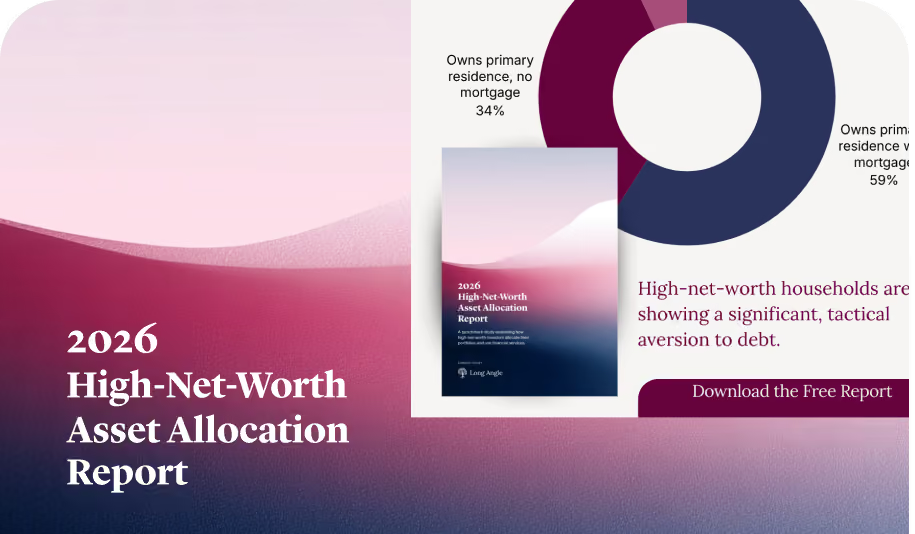
2026 High-Net-Worth Asset Allocation Report
See how high-net-worth investors with an average net worth of $17M are allocating across public equities, private markets, real estate, bonds and cash. Based on benchmark data from 230+ respondents.

What Founders Network Is, and What It Is Not
Founders Network is a paid peer-mentorship community for full-time founders of tech startups. Kevin Holmes, a former startup founder, started it in 2011, and it operates as a trade name of Provision Ventures LLC, a Delaware company. Founders Network says it has more than 600 members, about half of them serial founders, with chapters from San Francisco and New York to Berlin and Bangalore. About 15% of members sit outside any city chapter and belong to its virtual chapter.
Founders Network works differently from an accelerator: it takes no equity and sets no limit on how long you stay. Its FAQ describes it as something founders can use alongside an accelerator or in place of one. It is also separate from the Women Founders Network, a different organization that shares many of the same search results.
Founders Network Cost and Dues
Founders Network membership costs $75 to $249 a month, billed annually, which works out to $900 to $2,988 a year. The rate depends on the plan, and the plan depends on the funding or revenue of your current or past companies. Every membership is an annual commitment.
Founders Network Dues by Plan
| Plan | Company stage | Published rate, billed annually | Annual equivalent |
|---|---|---|---|
| Launch | Pre-revenue to $10K in revenue; self-funded up to $100K raised | $75 a month | $900 |
| Scale | $10K to $1M in revenue; $100K to $3M raised | $134 a month | $1,608 |
| Lead | $1M+ in revenue or $3M+ raised, or a new venture after prior success | $249 a month | $2,988 |
Source: Founders Network benefits page, read October 29, 2026. Annual equivalents are the monthly rate times twelve.
The monthly figures are quoted rates on an annual bill, though some outside roundups list the price as monthly. Founders Network also offers discounts to founders backed by several large venture firms and to graduates of selected accelerators, including Y Combinator and Techstars, and its about page mentions lifetime memberships without publishing their terms.
Its terms of use, dated April 2013, say there is an annual fee and that you can stop at any time by contacting the team. They do not address refunds of dues already paid. Before you apply, get the invoice amount for your plan, any discount, the renewal date and the refund position in writing, along with travel and lodging costs for the conferences, since the plans include passes rather than trips.
Who Qualifies: Founders Network Requirements
Founders Network admits full-time founders building a tech startup and does not admit service firms. Its request page also asks for a long-term outlook, shared values and a commitment not to sell to other members: pitching and self-promotion are off limits.
Membership runs by nomination and approval. A founder without an invitation can request one; the team reviews the request, and if it sees a fit, arranges a nomination, so you do not need to know a member already. The application itself takes a few minutes, and the membership committee sends its decisions on the last Friday of each month.
The published criteria are about the founder and the company, and there is no personal wealth requirement. The Lead plan names founders starting a new venture after a prior success, while the admission criteria still call for a full-time founder. A founder between companies, or one who has sold and is investing, should ask for an explicit eligibility decision before paying.
The Three Founders Network Plans
Each plan builds on the one below it, and the additions track what a company needs at each stage: validation, then fundraising, then leadership and scale. Founders Network encourages joining at the level that fits your experience, and upgrades are available later.
What Each Founders Network Plan Adds
| Plan | What it adds |
|---|---|
| Launch | Member forum, onboarding with a success coach, 40+ webinars a year, chapter meetings, startup discounts |
| Scale | Everything in Launch, plus quarterly goal-setting with a success coach, investor pitch coaching, the investor directory, a monthly fundraising roundtable and a pass to the spring fnIRL conference |
| Lead | Everything in Scale, plus monthly peer roundtables with founders who have led $100M+ exits and a pass to the three-day fnSummit retreat in Northern California |
Source: Founders Network homepage, benefits, success, investor and mentoring pages, read October 29, 2026.
How Founders Network Works
Every member starts with a small-group orientation, an introduction to the community and a one-on-one session on their goals. From there, most activity runs through a founders-only forum, which the organization also routes into Slack and email. Founders Network reports 15+ posts a week and 2.5 replies per post on the forum, with about ten years of searchable archives, alongside more than 100 in-person and virtual events a year.
Staff do much of the connecting. The organization advertises one to two staff-made introductions a month to founders, investors and experts, and staff who commit to replying within 24 hours on weekdays. On the fundraising side, its investor page lists 250+ active investors, every introduction double opt-in. Its spring fnIRL conference brings together 100+ founders and 20 venture funds, and the fall fnSummit, its 11th, ran October 21 to 23, 2026, in Sonoma wine country.
Two rules address the confidentiality question most founders ask about. Everything shared inside the community is treated as confidential and off the record, and the local peer advisory board, where founders take problems involving IP or strategy, never includes a direct competitor.
The value depends on use. Its own FAQ notes that the busiest members tend to be the ones who get the most from it, so the practical question is whether you will take part week to week.
How Founders Network Compares with Other Founder Groups
Founders Network starts earlier than most founder groups. It admits founders before revenue, while the operator groups below begin at $1 million in revenue or more. All of them qualify members on the company they run.
How Founder Groups Qualify Members
| Who it admits | What qualifies you | Personal wealth requirement | |
|---|---|---|---|
| Founders Network | Full-time tech startup founders; no service firms | Any stage from pre-revenue; the plan is set by revenue or capital raised | None published |
| EO | Founders, co-founders, owners or controlling shareholders | $1M+ in annual revenue | None published |
| Founders Club | Founders and owners of an active business, any industry | $1M+ in annual revenue, or $2.5M raised or exited ($3M in revenue for professional services and agencies) | None published |
| Hampton | Founders of tech and internet companies, bootstrapped or venture-backed | Members run companies with about $3M to $50M in revenue, per its homepage | None published |
| Vistage | CEOs and business owners | Built for leaders of companies with $5M+ in annual revenue | None published |
| YPO | Chief executives under 45 | Company size, such as 50 full-time employees and $16M+ in revenue for sales, service and manufacturing companies | None published |
| Long Angle | Founders, executives and investors, still building or after a sale | More than $3M in investable assets, excluding a primary residence, with no upper limit | Yes, verified |
Source: Each organization's own membership pages: Founders Network, EO, Hampton, Vistage and YPO read October 29, 2026; Founders Club read October 28, 2026; Long Angle: longangle.com.
Long Angle is the exception in this list: it admits on verified personal wealth rather than on the company, so founders tend to use it alongside a founder group rather than instead of one. Cost, format and commitment across the wider field are in high-net-worth peer advisory groups compared, and the Miami-based operator group is reviewed in Founders Club review.
Questions to Settle Before You Join
The published figures describe what Founders Network offers, not what a typical member gets from it. These are the questions worth putting to the membership team before you pay.
- Is the published rate what I will pay? Ask for the invoice amount for your plan, any discount, and the renewal price.
- Which plan would I be placed in? Ask how your funding and revenue history maps to Launch, Scale or Lead, and whether a prior exit qualifies you on its own.
- Who is active at my stage? Ask how many members at your revenue and funding stage took part in the last three months, and in which chapter.
- What do the introductions look like in practice? Ask how many introductions a member on your plan typically receives, and what happens when one goes nowhere.
- How do renewal and cancellation work? Ask for the membership agreement itself, including automatic renewal, notice periods and refunds.
- What stays private, and who pays to be in the room? Ask for the confidentiality and recording rules in writing, and whether partners or sponsors pay for access to members.
- Can I talk to members like me? Ask for two or three references at your stage, ideally including one who has left.
Is Founders Network Worth It? Who It Fits
Founders Network fits a full-time tech founder who wants experienced founders to answer questions quickly and staff-made introductions to investors, and who will use both. Its pre-revenue Launch plan is unusual among paid founder groups, and its Lead plan reaches founders past $1 million in revenue or starting again after a prior success.
Its published results are its own: testimonials it selects, and a $50 billion-plus total of member exits that measures companies, not what membership contributed. There is little independent evidence on how much members use it or how many renew, so the references you ask for carry most of the weight.
It fits less well if you run a services firm, which it does not admit, or if you have sold and stepped back from building, since its programs center on fundraising, go-to-market and scaling a company. Founders weighing groups after a sale will find the options in peer groups after selling a business.
After an Exit, a Second Set of Decisions
Revenue and funding measure the company; they say nothing about the founder's own balance sheet, which tends to stay concentrated. Respondents to Long Angle's 2026 Asset Allocation Report whose wealth came mainly from entrepreneurship hold 27% of their investment portfolio in private company equity, against 11% for other respondents.
Investment Portfolio by Primary Source of Wealth (% of Portfolio)
| Primary source of wealth | Public equities | Private company equity | Investment real estate | Cash |
|---|---|---|---|---|
| Entrepreneurship | 35% | 27% | 15% | 10% |
| Other | 61% | 11% | 11% | 6% |
Source: Long Angle 2026 High-Net-Worth Asset Allocation Report, 233 respondents, average net worth about $17M, fielded December 2025-January 2026. Average share of investment portfolio, excluding home equity; alternatives and bonds not shown.
The full breakdown is in how much company stock founders and employees hold, and what founders pay advisors to manage the rest is in wealth management for business owners.
Startup communities such as Founders Network, and operator groups such as EO, Hampton, Vistage and YPO, admit on the company and have no personal wealth requirement. Long Angle vets on personal wealth instead: members qualify with more than $3 million in investable assets, excluding a primary residence, verified, with no upper limit, and membership is free. That makes it a place to compare notes on what comes after the company succeeds, with peers who have made the same decisions. What to do after selling your business covers the months after the money lands.
Final Thoughts
Founders Network suits a full-time tech founder who wants experienced founders on call and will take part in the forum and the local chapter, at $900 to $2,988 a year. Before you pay, confirm the plan you would be placed in, the invoice and renewal terms, and who is active at your stage. Building the company is one set of decisions; the wealth it creates is another, and some founders add a community built for the second when they get there.
Frequently Asked Questions
How much does Founders Network cost?
Founders Network publishes rates of $75 a month for Launch, $134 for Scale and $249 for Lead, all billed annually, which is $900, $1,608 and $2,988 a year. Your plan depends on the funding or revenue of your current or past companies, and some founders backed by large venture firms or selected accelerators qualify for a discount.
What are the Founders Network requirements?
You need to be a full-time founder building a tech startup; service firms are not eligible. Membership runs by nomination and approval, with the membership committee deciding monthly, and your plan is set by your company's revenue or capital raised. It has no personal wealth requirement.
Is Founders Network worth it?
It is most useful for a full-time tech founder who will use the forum, the staff introductions and the investor access consistently, at $900 to $2,988 a year. Its outcome figures are self-reported, so ask for references at your stage. It is a weaker fit for service businesses, which it does not admit, and for founders who have sold and stepped back from building.
What are the alternatives to Founders Network?
Other founder groups, including EO, Founders Club, Hampton, Vistage and YPO, also admit on the company you run, mostly from $1 million in revenue and up. Long Angle admits on verified personal wealth instead: more than $3 million in investable assets, excluding a primary residence. Membership is free, with optional Trusted Circles at $4,500 a year.
Want peers for the wealth decisions, not just the startup?
Long Angle is a free, vetted community of entrepreneurs, executives and investors with more than $3 million in investable assets, comparing notes on advisors, tax, estate and what to do after a sale.
More From Long Angle
Beyond Wealth Newsletter
Navigating Wealth Podcast
Research & Studies
Alternative Investment Education
Blog